Auto Accident Chiropractor San Antonio: Complete Guide | Dr. Dan Foss
Hurt in a car accident in San Antonio? Dr. Dan Foss, DC covers hidden injuries, whiplash recovery, PIP and insurance, and your first visit. Se habla español.

On this page
If you have been in a car accident in San Antonio, seeing a chiropractor within the first 72 hours gives you the best chance at a complete recovery — even if you feel fine right now. Hidden injuries from auto accidents are not the exception; they are the rule. At Pura Vida Chiropractic, I have spent 23 years treating auto accident injuries with advanced SOT chiropractic care, and the patients who seek early evaluation consistently recover faster and more completely than those who wait.
This guide covers everything San Antonio residents need to know after a car accident — from the injuries you cannot feel yet, to the insurance process, to what your first visit looks like, and why the right chiropractor makes all the difference.
Why Should I See a Chiropractor After a Car Accident?
You should see a chiropractor because even low-speed car accidents generate enough force to damage your spinal muscles, ligaments, discs, and joints — and these injuries are frequently hidden by adrenaline for 24 to 72 hours after the accident. Early chiropractic evaluation identifies and treats injuries at their most treatable stage, preventing acute damage from becoming chronic pain. A rear-end collision at just 5 miles per hour produces enough force to cause whiplash-type injuries. At 15 to 20 miles per hour — the speed of many San Antonio fender benders — the forces on the cervical and lumbar spine are substantial.
The problem is that adrenaline and endorphins mask pain immediately after an accident. You walk away from the scene feeling shaken but physically okay. Then 24, 48, or 72 hours later, the stiffness starts. The headaches begin. Pain in your neck, back, or shoulders gradually intensifies. By the time you realize something is wrong, inflammation has set in, scar tissue is forming, and compensatory movement patterns are already developing.
A chiropractor trained in auto injury evaluation — like myself — knows exactly what to look for before symptoms appear. Early evaluation and treatment gives us the opportunity to identify and address injuries at their earliest, most treatable stage.
This is not about creating unnecessary treatment. It is about preventing acute injuries from becoming chronic pain conditions that affect you for years.
What Hidden Injuries Can a Car Accident Cause?
Car accidents commonly cause hidden whiplash, cervical disc herniation, thoracic and lumbar spine injuries, concussion, sacroiliac joint displacement, and soft tissue damage — injuries that may produce no symptoms for days or weeks. Here are the hidden injuries I most commonly identify in San Antonio auto accident patients:
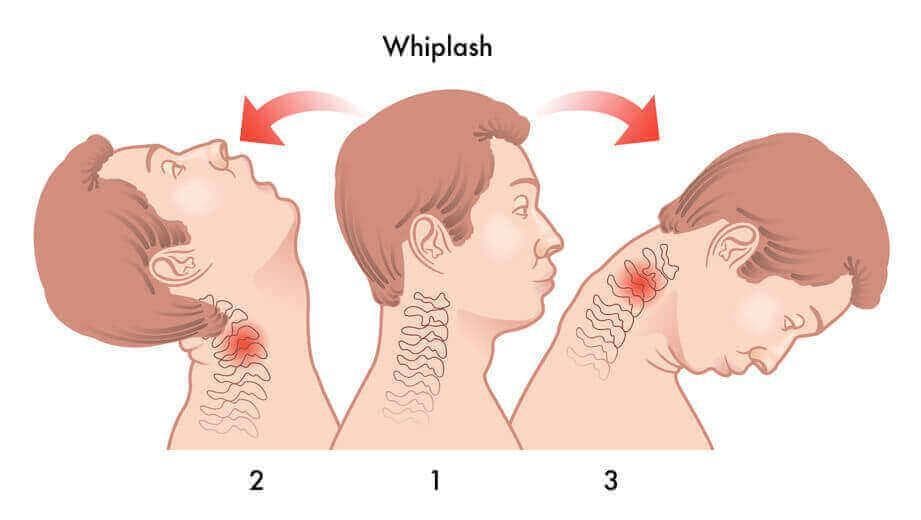
Whiplash (cervical acceleration-deceleration injury). Whiplash affects the muscles, ligaments, discs, nerves, and joints of the cervical spine. It is the most common car accident injury and can take 24 to 72 hours — sometimes weeks — to produce noticeable symptoms. Untreated whiplash can lead to chronic neck pain, headaches, dizziness, and cognitive difficulties.
Cervical disc herniation. The forces of a car accident can tear the outer wall of a cervical disc, allowing the inner material to herniate and compress a nerve root. Symptoms may include neck pain with radiating arm pain, numbness, or weakness. This injury is often missed on initial ER evaluations because X-rays do not show disc injuries — only MRI can visualize them.
Thoracic and lumbar spine injuries. The seatbelt restraint system, while life-saving, concentrates force across the chest and pelvis. This can cause mid-back (thoracic) and lower back (lumbar) injuries, including muscle strain, ligament sprain, disc injury, and sacroiliac joint dysfunction.
Concussion and post-concussion syndrome. Even without direct head impact, the brain can be injured by the acceleration-deceleration forces of a car accident. Symptoms include headaches, brain fog, difficulty concentrating, memory problems, sensitivity to light, and sleep disturbances. The occiput-atlas junction is often involved.
Sacroiliac joint displacement. The force of impact can shift the SI joints — the large joints connecting the sacrum to the pelvis. SI joint dysfunction produces low back pain, hip pain, and leg pain that is frequently misdiagnosed as a lumbar disc problem or sciatica.
Soft tissue injuries. Muscle strains, ligament sprains, and myofascial damage throughout the spine and extremities are universal in car accidents. These injuries cause inflammation, muscle spasm, and restricted movement.
What Is the Whiplash Recovery Timeline?
Most whiplash cases recover in 6 to 12 weeks with proper chiropractic care: the acute inflammation phase lasts 1-2 weeks, the subacute repair phase runs from weeks 2-6, and the remodeling phase completes by week 12. The whiplash recovery timeline depends on severity, how quickly treatment begins, and what approach is used.
Week 1-2: Acute inflammation phase. Pain, stiffness, headaches, and muscle spasm are at their peak. The goal during this phase is reducing inflammation, managing pain, and beginning gentle correction of cervical misalignments. I typically see whiplash patients two to three times per week during this phase.
Week 2-6: Subacute repair phase. Inflammation begins to subside and damaged tissues are actively healing. This is a critical window — the quality of healing that occurs during this phase determines your long-term outcome. Chiropractic adjustments, soft tissue therapy, and specific exercises guide the healing process in the right direction. Scar tissue is forming, and we want it to form along functional lines rather than in disorganized, restrictive patterns.
Week 6-12: Remodeling and rehabilitation phase. Tissues are maturing, strength is returning, and the focus shifts to full restoration of range of motion, stability, and function. Treatment frequency decreases to once or twice per week.
Beyond 12 weeks: Maintenance and monitoring. Most whiplash patients are fully recovered or near full recovery by this point. Some complex cases — particularly those involving disc herniation, ligament instability, or concussion — require extended care.
The single most important factor in whiplash recovery is starting treatment early. Research shows that patients who begin chiropractic care within the first one to two weeks after a car accident have significantly better outcomes than those who delay treatment for months.
How Does Insurance Work for Auto Accident Chiropractic Care?
Auto accident chiropractic care is typically covered by PIP (Personal Injury Protection), Med-Pay, the at-fault driver's liability insurance, or a letter of protection — and many patients pay nothing out of pocket. Here is what you need to know about each option:
Texas Personal Injury Protection (PIP). Texas requires auto insurance companies to offer PIP coverage, though it is optional for the policyholder. If you have PIP, it covers medical expenses — including chiropractic care — regardless of who was at fault. Standard PIP limits in Texas are $2,500 to $10,000. This coverage kicks in immediately with no deductible.
Liability insurance (the at-fault driver's policy). If another driver caused the accident, their liability insurance is ultimately responsible for your medical expenses. However, liability claims take time to settle. Chiropractic care can begin immediately under PIP, Med-Pay, or on a lien basis while the liability claim is processed.
Med-Pay coverage. Similar to PIP, Med-Pay covers medical expenses for you and your passengers regardless of fault. It is often included in auto policies and many policyholders do not realize they have it.
Health insurance. Your personal health insurance can also be used for auto accident chiropractic care, though co-pays and deductibles may apply. This is sometimes used when PIP limits are exhausted.
Letter of protection (lien). In many cases, we can treat you on a letter of protection — meaning we defer payment until your personal injury case settles. This ensures you receive the care you need without upfront out-of-pocket costs.
At Pura Vida Chiropractic, we work with all major insurance carriers and have extensive experience navigating auto accident claims. Our team handles the insurance paperwork so you can focus on healing.
What Should I Expect at My First Visit After a Car Accident?
Your first visit includes a detailed accident history, comprehensive physical examination, digital X-rays when clinically indicated, a clear diagnosis with a specific treatment plan, and in most cases, initial treatment that same day. Here is exactly what happens:
Detailed accident history. I will ask about the details of the accident — speed, direction of impact, where you were sitting, whether you saw the impact coming, what symptoms you experienced at the scene and since. These details help me understand the mechanism of injury and predict which structures are most likely affected.
Comprehensive physical examination. This includes orthopedic testing, neurological evaluation (reflexes, sensation, muscle strength), range of motion testing, postural assessment, and palpation of the spine and surrounding tissues. I am looking for misalignments, muscle spasm, nerve involvement, and signs of instability.
X-rays when clinically indicated. Digital X-rays allow me to evaluate spinal alignment, fractures, dislocations, and pre-existing degenerative changes that may influence treatment. X-rays are taken in our office for immediate review. If MRI is needed (suspected disc herniation, ligament damage, or neurological signs), I will order one.
Diagnosis and treatment plan. After the evaluation, I will explain my findings in plain language — what is injured, how severe it is, and what treatment will involve. You will receive a specific treatment plan with frequency, duration, and expected outcomes. No vague promises, no open-ended commitments.
Initial treatment. In most cases, I begin treatment at the first visit. This may include gentle SOT adjustments, soft tissue therapy, ice therapy, and specific instructions for home care. The goal is to begin the healing process immediately.
How Does SOT Chiropractic Treat Auto Accident Injuries Differently?
SOT treats auto accident injuries through whole-body assessment (not just the pain site), gentle corrections that use positioning and body weight instead of forceful manipulation, cranial evaluation for post-concussion symptoms, and systematic indicator-based progress tracking for insurance documentation. The SOT approach is fundamentally different from the high-volume, adjustment-only approach used by many clinics.
Whole-body assessment. A car accident does not injure just one part of the spine. The forces travel through the entire body. SOT evaluates the pelvis, lumbar spine, thoracic spine, cervical spine, and cranium as an integrated system. This ensures that no injury is missed and that treatment addresses the full scope of damage.
Gentle, specific correction. Many auto accident patients are apprehensive about chiropractic adjustments — especially when they are in pain. SOT techniques are among the gentlest in chiropractic. Many corrections use positioning and the body's own weight rather than forceful manipulation. This is particularly important for whiplash patients, where aggressive cervical manipulation can worsen an acute injury.
Cranial assessment and treatment. The forces of a car accident can disrupt cranial bone motion, dural membrane tension, and upper cervical alignment. This is a major reason why some auto accident patients develop persistent headaches, migraines, dizziness, and cognitive symptoms. SOT cranial work addresses these issues directly.
Indicator-based progress tracking. SOT uses specific clinical indicators to track your progress at every visit. This is not guesswork — it is a systematic evaluation of how your body is responding to treatment, which corrections are holding, and what still needs to be addressed. This precision is especially important in auto accident cases where documentation of injury and progress may be needed for insurance or legal purposes.
Our auto injury results speak for themselves. Among our 18 documented patient outcomes on ChiropracticResults.com, one auto accident patient with multi-level disc injuries went from 10/10 pain to 2/10 while working three jobs — demonstrating what SOT chiropractic can achieve even under the most demanding recovery circumstances.
What Are Common Mistakes People Make After a Car Accident?
The most common mistakes are waiting too long to get evaluated, assuming a clean ER visit means no injury, relying on pain medication instead of structural treatment, stopping care before correction is complete, and failing to document injuries properly. Avoiding these mistakes can mean the difference between full recovery and chronic pain.
Waiting too long to get evaluated. This is the most common and most costly mistake. Every day you wait, inflammation increases, scar tissue forms, and the window for optimal recovery narrows. Get evaluated within the first 72 hours.
Going to the ER and assuming a clean bill of health means no injury. Emergency rooms are designed to rule out life-threatening injuries — fractures, internal bleeding, head trauma. They are not designed to diagnose whiplash, disc injuries, ligament sprains, or spinal misalignments. A normal ER visit does not mean you are uninjured.
Relying on pain medication as treatment. Muscle relaxers and anti-inflammatory medications manage symptoms but do nothing to heal the structural injuries caused by a car accident. Meanwhile, the underlying damage progresses.
Not following through with the full treatment plan. Many patients feel better after a few weeks of care and stop treatment prematurely. The pain has subsided, but the structural correction is not yet complete. This leads to incomplete healing, residual instability, and a much higher risk of chronic pain.
Not documenting the injury properly. If you are involved in an insurance claim or personal injury case, thorough documentation of your injuries and treatment is essential. Gaps in treatment or delayed care can be used to argue that your injuries were not serious. Consistent treatment with a chiropractor who maintains detailed records protects both your health and your legal interests.
Which San Antonio Areas Do You Serve for Auto Accident Injuries?
We treat auto accident patients from across the San Antonio metropolitan area. In addition to patients who come to our NW Military Highway office from the surrounding area, we specifically serve:
Alamo Heights — a community with heavy traffic along Broadway and the 281 corridor, where rear-end collisions and intersection accidents are common.
Westover Hills — located along the busy 151 corridor where high-speed accidents occur frequently.
Castle Hills, Shavano Park, and Stone Oak — residential communities where commuters face daily highway and intersection risks on 281, 1604, and I-10.
Leon Valley and Helotes — areas along the busy Bandera Road corridor where traffic accidents are a daily occurrence.
Boerne — patients who travel from the I-10 west corridor to access our specialized SOT care after car accidents.
Regardless of where your accident occurred in the San Antonio area, we can help. We also work with patients who are visiting San Antonio and are involved in an accident while traveling.
When Should I See a Chiropractor vs. Going to the ER?
Go to the emergency room immediately if you experience any of these after a car accident:
- Loss of consciousness
- Severe headache or confusion
- Inability to move a limb
- Numbness or weakness in both legs
- Loss of bladder or bowel control
- Severe chest pain or difficulty breathing
- Open wounds or suspected fractures
- Dizziness or vision changes
See a chiropractor within 72 hours if:
- You have neck or back pain, stiffness, or soreness
- You have headaches that started after the accident
- You have pain or numbness radiating into your arms or legs
- You feel generally sore or stiff but have no ER-level symptoms
- You were evaluated at the ER and released with no fractures or life-threatening findings
- You feel fine but were in a significant accident (symptoms may be delayed)
In many cases, it is appropriate to do both — visit the ER to rule out emergencies, then follow up with a chiropractor within the first few days for a comprehensive musculoskeletal evaluation.
How Long After a Car Accident Can I Start Chiropractic Treatment?
You can start chiropractic treatment immediately — ideally within the first 72 hours — with no waiting period, no referral required, and no need to wait for insurance approval. The sooner treatment begins, the better your outcome.
The sooner treatment begins, the better your outcome. Early intervention:
- Reduces inflammation before it becomes chronic
- Prevents scar tissue from forming in dysfunctional patterns
- Restores alignment before compensatory patterns become established
- Documents your injuries from the earliest possible date (important for insurance and legal purposes)
- Reduces the risk of acute injuries becoming chronic pain conditions
If your accident was weeks or months ago and you have not been treated, it is not too late. The earlier the better, but late treatment is far better than no treatment. Many patients come to Pura Vida months after an accident when their symptoms have not resolved with other approaches, and we still achieve excellent results.
Book your evaluation now — we can typically see auto accident patients within 24 hours.
Frequently Asked Questions About Auto Accident Chiropractic Care
How much does chiropractic care cost after a car accident?
In most cases, auto accident chiropractic care is covered by PIP, Med-Pay, the at-fault driver's liability insurance, or a letter of protection. Many patients pay nothing out of pocket. We will review your insurance coverage at your first visit and explain your options clearly.
Can I see a chiropractor if I am already seeing a medical doctor?
Yes. Chiropractic care and medical care are complementary, not competing. Many of our auto accident patients are simultaneously under the care of their primary care physician, an orthopedist, or a neurologist. We coordinate care and communicate with your other providers as needed.
How many visits will I need after a car accident?
The number of visits depends on the severity of your injuries. Mild whiplash may resolve in 8 to 12 visits over 4 to 6 weeks. Moderate injuries typically require 12 to 24 visits over 6 to 12 weeks. Severe injuries — disc herniations, ligament damage, concussion — may require 24 to 36 visits or more over 3 to 6 months. I will give you a specific estimate at your first visit.
Will the chiropractor provide documentation for my insurance claim or attorney?
Absolutely. Thorough documentation is a standard part of our auto accident care. We maintain detailed records of your injuries, examination findings, X-ray results, treatment provided, and progress at each visit. We provide narrative reports and records to your insurance company or attorney upon request.
Ready to Experience Natural Healing? Book Your Free Evaluation
Pura Vida Chiropractic 2318 NW Military Hwy #103, San Antonio, TX 78231 📞 (210) 685-1994 🕐 Mon/Tue/Thu: 7:00 AM – 4:00 PM 👉 Book Free Evaluation