
Could Your Spine Be Causing Your Stomach Problems?
Most people don't connect back pain with stomach issues — but they should. Learn how specific spinal vertebrae directly control your digestive organs through the somato-visceral reflex.
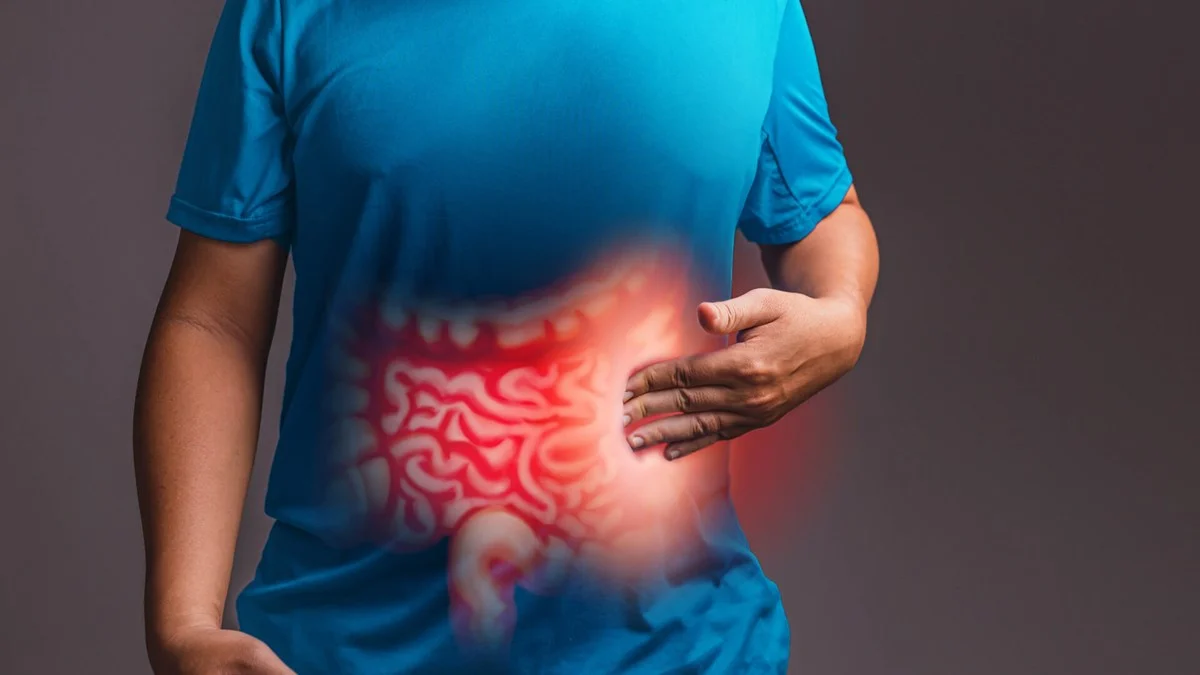
When a patient comes in complaining of chronic acid reflux, bloating, or unpredictable digestion, the last place they expect me to look is their mid-back. But after more than two decades in practice, that's exactly where I start — and more often than not, that's where we find the answer.
This isn't a radical idea. It's anatomy.
The Spine and Your Organs Are in Constant Conversation
Your nervous system doesn't just control muscles and movement. The same spinal nerves that send signals to your back muscles also carry autonomic fibers to your internal organs — controlling motility, secretion, blood flow, and function. When a vertebra shifts out of alignment and irritates those nerves, the organ on the other end of that connection doesn't work the way it should.
This is called the somato-visceral reflex — "soma" meaning body (in this case, the spine), and "visceral" meaning organ. A structural problem in the spine creates a functional problem in the organ.
Here's where it gets interesting for anyone dealing with chronic digestive complaints: the 5th thoracic vertebra (T5) sits right at the level where the autonomic nerves branch off to the stomach. T6 through T9 connect to the liver and gallbladder. If any of these vertebrae are chronically subluxated — meaning they've shifted and are irritating the nerve — the organs those nerves supply are operating under interference.
The Traffic Runs Both Ways
Here's something most people don't know: the reflex runs in both directions.
The somato-visceral reflex goes spine → organ, but there's also a viscero-somatic reflex that goes organ → spine. When an organ is chronically stressed — say, a stomach dealing with years of excess acid, or a liver under stress from a poor diet — it sends distress signals back up the nerve pathway and keeps pulling that corresponding vertebra back into subluxation.
This is why so many patients come in, get adjusted at the same spot, feel better for a week or two, and then find themselves back in the same pain. They're not doing anything wrong. Their spine isn't "weak." The organ is driving the problem, and until we address both sides of the loop, we're only treating half the picture.
I've seen this play out hundreds of times in our San Antonio clinic. A patient comes in with persistent mid-back tightness between the shoulder blades. They mention almost as an afterthought that they've been on omeprazole for three years. When I check their T5, it's the worst segment in their spine — tight, restricted, and it keeps going back out every few weeks. Once we address both the vertebra and the stomach reflex, things start to change in a lasting way.
What Does This Mean for Common Digestive Conditions?
If you've been struggling with any of the following and haven't found lasting relief through medications or dietary changes alone, a spinal component may be worth investigating:
- GERD and acid reflux — T5 subluxation reduces parasympathetic tone to the stomach, which can lead to poor valve function and excess acid production
- Chronic nausea — the vagus nerve and thoracic nerves both influence gastric motility
- Gallbladder symptoms — T6-T9 subluxations can interfere with bile flow and gallbladder emptying
- Liver congestion — T6-T8 have direct connections to liver innervation
- Irritable bowel patterns — multiple thoracic and lumbar levels affect the large and small intestine
This doesn't mean your spine is the only cause. Digestive conditions are complex. But when you've tried the standard routes and keep circling back to the same problems, it's worth asking whether the nervous system pathway has been evaluated.
How CMRT Addresses Both the Spine and the Organ
Standard chiropractic adjusts vertebrae — and does it well. But there's an advanced technique within the SOT (Sacro Occipital Technique) system called CMRT, or Chiropractic Manipulative Reflex Technique, that takes this a step further. Developed by Dr. M.B. DeJarnette, CMRT works with both the spinal segment and the organ reflex at the same time.
In a CMRT session, we identify which visceral reflexes are active using soft tissue contacts at specific anatomical points — what DeJarnette called Chapman's reflex points. These are areas of tissue texture change and tenderness that correspond to particular organ systems. We then adjust the associated vertebra and work the organ reflex contacts together, breaking the viscero-somatic loop rather than just the spinal component.
I'm one of a relatively small number of doctors in the San Antonio area with an Advanced SOT certification through SORSI — the Sacro Occipital Research Society International — which includes formal training in CMRT. It's a significant additional credential beyond standard chiropractic training, and it's what allows us to offer this integrated approach at Pura Vida.
Who Should Consider This Approach?
You might be a good candidate for CMRT-based evaluation if:
- You've had the same vertebra "go out" repeatedly for years
- You have chronic digestive symptoms that haven't fully resolved with standard treatment
- Your GI workup came back normal but you still feel off
- You notice your back and your stomach symptoms flare at the same time
- You've been told to just manage your reflux with medication indefinitely
This is especially common in our San Antonio community, where many patients have been managing digestive issues for years with antacids, H2 blockers, or PPIs — medications that manage symptoms but don't restore normal nerve function.
Key Takeaways
- The somato-visceral reflex connects specific spinal vertebrae to specific organs — including the stomach, liver, and gallbladder
- T5 connects directly to the stomach; T6-T9 connect to the liver and gallbladder
- The viscero-somatic reflex runs in reverse — a stressed organ pulls its corresponding vertebra back into subluxation
- This loop explains why the same spinal segment keeps going out for some patients
- CMRT addresses both the vertebral subluxation and the organ reflex simultaneously
- Dr. Dan Foss holds Advanced SOT Certification through SORSI and offers CMRT at Pura Vida Chiropractic
If you've been managing digestive symptoms without finding the root cause, or if you keep returning for the same spinal adjustments without lasting results, I'd love to talk with you. Give us a call at (210) 685-1994 — we're here to help you find answers that actually stick.