SI Joint Pain in San Antonio: Signs It's Your Sacroiliac Joint, Not Your Disc, and What Helps
One-sided low back or buttock pain that hurts getting out of the car or rolling over in bed? Dr. Dan Foss, DC explains SI joint pain, red flags, and gentle SOT care in San Antonio. (210) 685-1994.
On this page
You stand up from your desk in Castle Hills and feel a sharp catch low on one side of your back, right where your belt dimple sits. Getting out of the car hurts. Rolling over in bed hurts. Climbing stairs or standing on one leg to put on your pants hurts. Your doctor called it low back pain, but the stretches you were given don't seem to touch it.
That pattern often points to the sacroiliac (SI) joint, one of the most commonly overlooked sources of low back and buttock pain. Here is how to recognize it, which symptoms need a medical doctor instead, and how we approach it at Pura Vida Chiropractic.
What the SI Joint Is
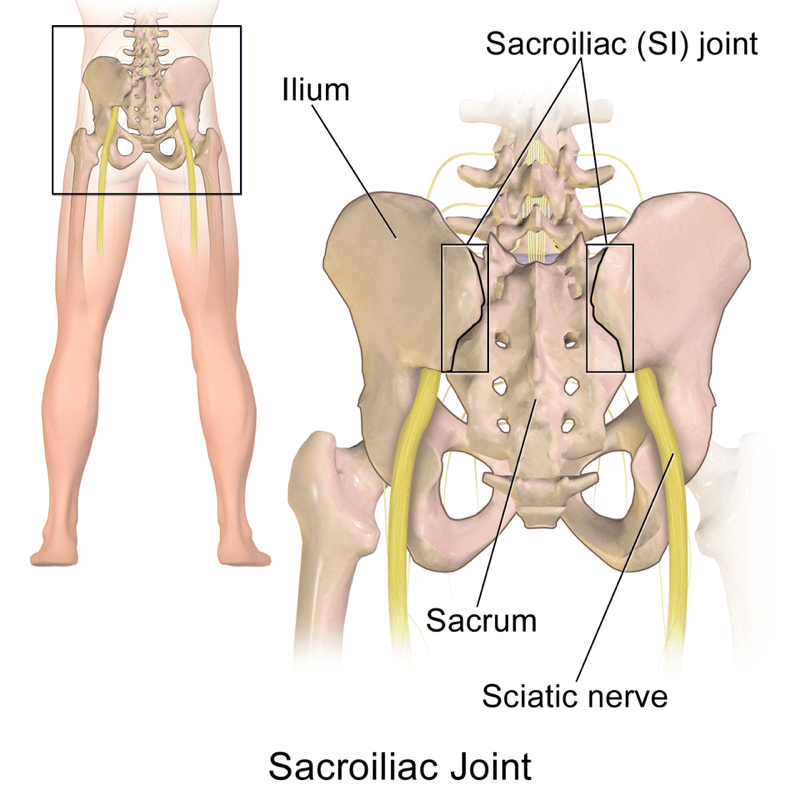
You have two SI joints, one on each side, where the sacrum (the triangle-shaped bone at the base of your spine) meets the pelvis. Strong ligaments hold them together, and they are designed to move only a little. Their job is to pass the weight of your upper body into your legs and absorb shock when you walk, run, or lift.
Problems tend to come from two opposite directions:
- Too little motion. The joint gets stuck, so the low back, hip, and other side of the pelvis have to compensate.
- Too much motion. The ligaments are stretched or strained, and the joint becomes unstable. This is common during and after pregnancy, after a fall onto the buttock, and in people whose work or sport loads one leg repeatedly.
These two problems can feel alike but need different care, which is one reason SI pain gets mistreated so often. For a deeper look at the anatomy, see our post on the sacroiliac joint.
Common Signs of SI Joint Pain
- Pain on one side of the low back or buttock, often right over the bony dimple.
- Pain that can travel into the groin, hip, or back of the thigh, usually stopping above the knee.
- Pain with transitions: standing up, getting in and out of a car, rolling over in bed.
- Pain climbing stairs, standing on one leg, or with long walks.
- Feeling like one hip is "higher" or the pelvis is "out."
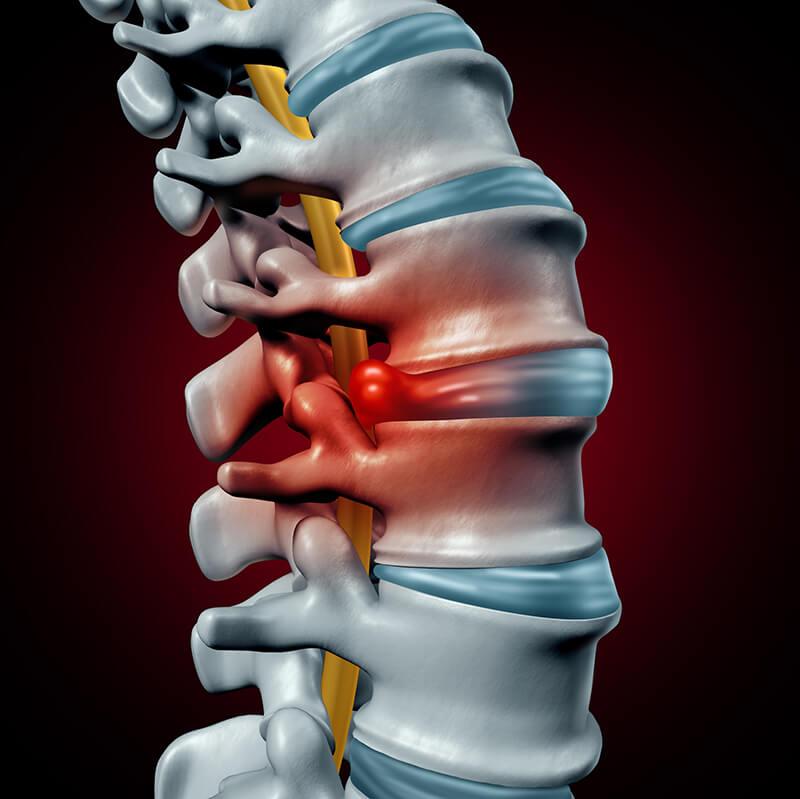
SI pain is easy to confuse with a disc problem or sciatica. A rough clue: pain that shoots below the knee with numbness or tingling in the foot is more suggestive of an irritated nerve root, which needs a different plan. Only an exam can sort this out.
First: When This Is Not a Chiropractic Problem
Go to the ER right away if back or buttock pain comes with:
- Numbness in the groin, inner thighs, or "saddle" area.
- New loss of bladder or bowel control, or trouble urinating.
- Weakness in a leg that is getting worse.
See a medical doctor promptly for fever with back pain, pain after a significant fall or accident, a history of cancer, unexplained weight loss, or pain that is worst at night and does not change with position. Also mention it to your doctor if you are under 45 and have morning stiffness that eases with movement rather than rest, since that pattern can point to an inflammatory condition that a rheumatologist should evaluate.
Why the SI Joint Is a Specialty at Pura Vida
Sacro Occipital Technique (SOT) was developed around how the sacrum and pelvis influence the entire spine. Dr. Dan Foss, DC holds an Advanced SOT certification and has more than 23 years of practice. He sees the spine, the organs, and the cranium as one connected system, which matters here because the pelvis and the base of the skull work as a pair.
An evaluation for SI pain generally includes:
- Screening for the red flags above, with referral if needed.
- Orthopedic and movement tests to see whether the SI joint, a disc, the hip, or a nerve is the likely source.
- SOT category assessment to tell whether the joint is stuck or unstable, since the treatment is different for each.
- Gentle correction using SOT pelvic blocks. Padded wedges are placed under the pelvis while you lie down, letting your own body weight and breathing do much of the work. There is no forceful twisting of an already unstable joint.
- CMRT reflex work where appropriate, since some organ-related reflex patterns share levels with the low back and pelvis.
- A home plan that may include support recommendations, activity changes, and simple stabilizing exercises.
Learn more on our SI joint dysfunction page and our SOT chiropractic page.
SI Joint Pain in Pregnancy and After Birth
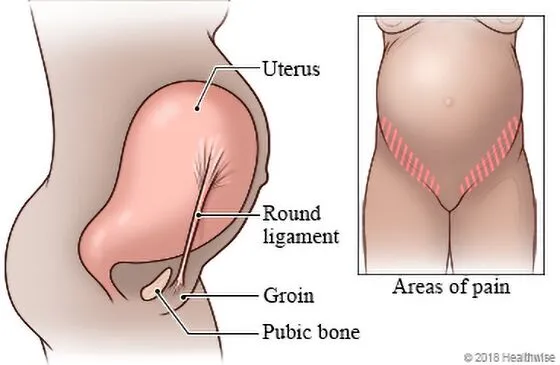
Pregnancy hormones loosen pelvic ligaments so the body can prepare for birth, and that can make the SI joints painful. SOT and the Webster Technique are gentle, positioning-based approaches that we use with expecting moms. See our pelvic girdle pain page and our pregnancy chiropractic services for more.
What You Can Do Now
- Keep your knees together when getting in and out of the car: sit first, then swing both legs in.
- Sleep with a pillow between your knees if lying on your side.
- Avoid sitting on a wallet or with your legs crossed for long periods.
- Don't force deep stretches into the painful side. If the joint is unstable, aggressive stretching may make it worse.
Frequently Asked Questions
Can a chiropractor help SI joint pain? For mechanical SI joint problems, chiropractic care may help reduce pain and restore more normal pelvic motion. The key is identifying whether the joint is stuck or unstable, because the approach differs.
Will an X-ray or MRI show SI joint dysfunction? Often not. Imaging is useful for ruling out fractures, arthritis, or inflammatory changes, but mechanical SI problems are usually identified through a hands-on exam and movement tests.
Is SOT gentle? Yes. SOT relies largely on padded blocks and positioning rather than forceful manipulation, which makes it well suited to unstable joints, pregnancy, and patients who are nervous about being adjusted.
Do you speak Spanish? Yes, our office is bilingual. Lea este artículo en español: dolor de la articulación sacroilíaca.
Stop Guessing About One-Sided Back Pain
We see patients from across San Antonio, including Castle Hills, Shavano Park, Stone Oak, Alamo Heights, Olmos Park, and Helotes. Call (210) 685-1994 or book a consultation. We are at 2318 NW Military Hwy Suite 103, San Antonio, TX 78231.
This article is for general education and is not a substitute for medical diagnosis or emergency care. Individual results vary.