Speech Delay & Cranial Chiropractic in Children | San Antonio TX
Speech delays are often connected to cranial misalignment, tongue tie, and vagal dysfunction. Learn how cranial chiropractic supports speech development through palate mechanics.
Your child is two years old and saying very few words. Your pediatrician says "wait and see." You are starting to wonder if something is structurally preventing your child from speaking — and you are right to wonder.
In 23 years of pediatric chiropractic practice using Sacro-Occipital Technique (SOT) and SOT Craniopathy, I have seen how much cranial alignment and palate mechanics affect speech development. Speech therapy is important, but it works better when the physical structures controlling speech are properly aligned.
What Is a Speech Delay?
Speech delay means your child is not reaching speech milestones on schedule. By age two, kids typically have 50+ words. By age three, they are combining words into phrases. Speech delay can mean:
- Fewer words than expected
- Difficulty with specific sounds (usually articulation problems)
- Difficulty combining words into sentences
- Oral motor weakness (difficulty with eating, drinking, or moving the tongue and lips)
A speech delay can have many causes — hearing loss, neurological differences, environmental factors, or structural/mechanical problems like tongue tie, palate restriction, or cranial misalignment.
The Structural Causes of Speech Delay
Most speech therapists focus on the brain and the "motor planning" involved in making sounds. But they often miss the mechanical constraints that make speech harder:
Tongue Tie and Lip Tie
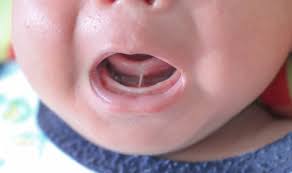
The frenulum — the tissue under the tongue connecting it to the floor of the mouth — can be too short or too thick. This restricts tongue motion, making certain sounds impossible and feeding/swallowing difficult.
Tongue tie affects the sounds that require tongue tip elevation: T, D, L, N, S, Z, R. A child with tongue tie will sound like they have a lisp and will struggle to articulate these sounds no matter how much speech therapy they get — until the tongue tie is released.
I work closely with pediatric dentists and ENTs who perform frenulum release (tongue tie division). But after the release, cranial chiropractic helps the child retrain the newly mobile tongue and optimize palate function.
Palate Mechanics
The hard palate and soft palate are not just static structures — they move. The soft palate must elevate to seal off the nose during speech (for sounds like P, B, T, D, K, G). If the palate is mechanically restricted, the child cannot produce nasal-closure sounds properly.
The sphenoid bone (deep in the skull) directly affects palate mechanics through attachments to muscles controlling palate elevation. When the sphenoid is misaligned, palate motion is restricted.
Cranial Nerve Function
Four cranial nerves control the muscles of speech:
- CN V (Trigeminal): Jaw muscles
- CN VII (Facial): Lips and facial expression
- CN IX (Glossopharyngeal): Throat and back of tongue
- CN X (Vagus): Soft palate, throat, voice quality
- CN XII (Hypoglossal): Tongue motion
When the skull bones compressing these nerves are misaligned, the nerves cannot function optimally. A child might have poor jaw control, weak lip rounding, or weak tongue elevation — all of which interfere with articulation.
Brainstem Function
Speech motor planning happens in the brainstem (specifically the cranial nerve motor nuclei). When the brainstem is irritated or has poor blood flow — often from sphenobasilar dysfunction or dural tension — speech development is slower.
How Cranial Chiropractic Supports Speech
My approach with speech-delayed children focuses on:
1. Cranial assessment for tongue tie and palate restriction. I evaluate palate symmetry, soft palate elevation, and tongue mobility. If I identify a mechanical restriction like tongue tie, I refer to a pediatric dentist or ENT for evaluation and possible frenulum release.
2. Sphenoid and palate bone work. I use gentle techniques to improve sphenoid alignment and palate mechanics, allowing the muscles of palate elevation to work properly.
3. Cranial nerve decompression. By correcting sphenobasilar, temporal, and mandibular alignment, I reduce mechanical compression on CN V, VII, IX, X, and XII, optimizing their nerve function.
4. Brainstem optimization. By restoring proper blood flow and reducing dural tension, I improve the brainstem's ability to coordinate speech motor planning.
5. Vagal tone enhancement. A strong vagus nerve (CN X) is critical for clear voice quality, throat control, and swallowing safety during speech.
How Speech Therapy and Chiropractic Work Together
Speech therapy teaches your child how to make sounds and coordinate their mouth. Chiropractic makes the physical structures that produce speech work better. Both are important.
I often see this pattern: a child goes to speech therapy but makes slow progress because the physical structures are restricted. Once we correct the cranial misalignment and palate mechanics, the same speech therapy becomes much more effective — and the child catches up faster.
What to Expect
With combined chiropractic and speech therapy:
- Weeks 1-3: Better jaw mobility and palate motion
- Weeks 3-8: New sounds emerging, intelligibility improving
- Weeks 8-12: Major improvement in word clarity and new sound development
- Weeks 12+: Continued catch-up with speech therapy support
Most children show noticeable improvement within 4-6 weeks of regular cranial care combined with speech therapy.
Internal Links
For deeper understanding of speech and cranial mechanics:
- Tongue Tie and Chiropractic
- Sphenoid Bone: Master Bone of the Skull
- Cranial Chiropractic
- Pediatric Chiropractor
- Vagus Nerve: Gut-Heart-Spine Connection
- Related condition: Chronic Ear Infections in Children: Chiropractic Approach — hearing affects speech development
Frequently Asked Questions
Q: Can chiropractic help if my child has not been diagnosed with tongue tie? A: Yes. Even without tongue tie, many children have palate restrictions or cranial misalignments that interfere with speech. Cranial chiropractic helps optimize the mechanical structures of speech.
Q: Should I wait for speech therapy to start, or do both now? A: I recommend both simultaneously. Chiropractic optimizes the structures; speech therapy teaches the skills. Neither delays the other.
Q: My child had a tongue tie release. Can chiropractic help now? A: Absolutely. After tongue tie release, the child has newly mobile tissue that needs to be retrained. Cranial work helps optimize palate function and retrains tongue movement patterns for clear speech.
Q: How do you work with a nonverbal or low-verbal child? A: Very gently and patiently. I assess the structural function through palpation and observation. Many nonverbal children improve orally after cranial work even if they do not speak more words immediately.
Q: What if my child also has autism or other conditions? A: Cranial work supports speech development regardless of diagnosis. Many autistic children benefit from improved vagal tone and reduced sensory defensiveness, which actually helps them access speech skills.
Q: Does insurance cover speech delays? A: Some plans cover chiropractic for children. We can check your coverage at your first visit.
The Pura Vida Approach
We see speech delays not only as neurological challenges, but as structural problems that need optimization. The palate must move freely. The tongue must have full mobility. The cranial nerves must not be compressed. The brainstem must have good blood flow.
Twenty-three years of working with speech-delayed children has taught me that small structural corrections, combined with speech therapy, create the fastest and most durable improvement.
Ready to Support Your Child's Speech Development?
Call (210) 685-1994 or book your free consultation. We will assess your child's palate mechanics and cranial alignment, explain what we find, and discuss how chiropractic can support their speech development alongside speech therapy.
Your child wants to talk. Sometimes they just need the physical structures to work better. Let us help.