
Do You Have Subluxations? Take This Health Test | San Antonio TX
Take Dr. Dan Foss's subluxation health test to find out if you need a chiropractic spinal checkup at Pura Vida Chiropractic in San Antonio TX.
On this page
I am going to ask you 19 simple yes-or-no questions. If you answer yes to even one of them, there is a strong chance that vertebral subluxations are affecting your health right now — silently, painlessly, and progressively. After more than 23 years of treating patients across San Antonio at Pura Vida Chiropractic, I have seen this test open people's eyes to problems they never knew they had.
My name is Dr. Dan Foss. I am an Advanced SOT certified chiropractor through SORSI, and I serve families throughout Castle Hills, Stone Oak, Alamo Heights, Leon Valley, Helotes, Shavano Park, and Boerne. I created this health test to help people like you understand that many of the symptoms you have been living with — symptoms you may have accepted as normal — could actually be signs that your spine needs attention.
Grab a pen. Be honest with yourself. And let us find out what your body is trying to tell you.
The 19-Question Subluxation Health Test
1. Do you take pain relievers more than twice a week?
If you answered yes: Pain relievers mask symptoms — they do not fix causes. If you need Advil, Tylenol, or aspirin multiple times a week, your body is sending you a message that something is structurally wrong. Subluxations create chronic pain signals that medications can temporarily suppress but never resolve. The subluxation remains, the nerve interference continues, and the underlying condition worsens while you feel artificially better.
2. Have you ever been in an auto accident or had a bad fall?
If you answered yes: Auto accidents and falls are among the most common causes of subluxation. Even low-speed collisions generate forces that can shift vertebrae out of alignment. Studies show that injuries from a 5 mph collision can cause long-term spinal damage. Falls — whether from a ladder, on ice, down stairs, or even tripping on a sidewalk — can create subluxations that go undetected for years because the initial pain resolves while the misalignment remains.
3. Do you experience neck or back pain more than twice a month?
If you answered yes: Recurring pain is not normal. It is your body's way of telling you that something is structurally wrong. Many patients tell me, "I have always had a bad back" or "my neck just does that." No — your spine was not designed to hurt. Recurring pain that comes and goes is a classic sign of an unstable subluxation that shifts in and out of a pain-producing position.
4. Do you feel fatigued late in the day?
If you answered yes: Fatigue is one of the most overlooked signs of subluxation. When your nervous system is operating against the resistance of spinal misalignment, your body expends enormous energy just trying to function normally. It is like driving with the parking brake on — you can still move, but everything requires more effort, and you run out of fuel faster. Correcting subluxations often produces dramatic improvements in energy levels within the first few weeks of care.
5. Do you suffer from arthritis?
If you answered yes: Arthritis in the spine is frequently the end result of years of uncorrected subluxation. When a joint is misaligned, the surfaces wear unevenly, just like a tire that is out of alignment wears unevenly. Over time, this uneven wear causes degeneration — bone spurs, disc thinning, and the chronic inflammation we call arthritis. While chiropractic care cannot reverse arthritis, it can slow its progression dramatically by restoring proper alignment and reducing abnormal joint stress.
6. Do you have chronic digestive problems?
If you answered yes: Your digestive system is controlled by nerves that exit your spine in the mid-back and lower-back regions. Subluxations in these areas can interfere with the nerve signals that control stomach acid production, intestinal motility, enzyme secretion, and nutrient absorption. Many patients who come to me for back pain are surprised when their chronic bloating, constipation, acid reflux, or IBS symptoms also improve with chiropractic care.
7. Have you had pain between your shoulder blades for more than a month?
If you answered yes: Pain between the shoulder blades — the thoracic spine region — is one of the most telling indicators of subluxation. This area of the spine is where the nerves that supply your heart, lungs, stomach, liver, and gallbladder exit. Chronic pain here is not just a muscular issue. It is frequently a sign that subluxations are interfering with the nerve supply to vital organs.
8. Do you experience headaches or migraines more than twice per month?
If you answered yes: The vast majority of headaches originate from problems in the upper cervical spine — the top two vertebrae in your neck. When these vertebrae are subluxated, they can irritate the nerves and blood vessels that supply your head, creating tension headaches, cervicogenic headaches, and even triggering migraines. I have seen patients who suffered from headaches for decades become headache-free after upper cervical corrections using SOT techniques.
9. Do you have chronic shoulder, hip, elbow, or knee pain?
If you answered yes: Your extremity joints do not operate in isolation — they are connected to your spine through chains of muscles, nerves, and fascia. A subluxation in your lower back can alter your gait pattern, which changes the stress on your hips and knees. A subluxation in your neck can create nerve interference that manifests as shoulder or elbow pain. Many patients who have been treated unsuccessfully for joint pain find relief when the underlying spinal subluxation is identified and corrected.
10. Do you suffer from allergies, asthma, or breathing problems?
If you answered yes: Your respiratory system is controlled by nerves that exit the mid-cervical and upper-thoracic spine. Subluxations in these regions can compromise the nerve supply to your lungs and bronchial tubes, making you more susceptible to allergic reactions, asthma attacks, and chronic breathing difficulties. Research has shown that chiropractic adjustments can improve lung function and reduce the frequency and severity of asthma episodes.
11. Do you have insomnia or inadequate sleep?
If you answered yes: The upper cervical spine has a direct influence on your brainstem — the part of your brain that regulates sleep-wake cycles, heart rate, and breathing. Subluxations in the atlas (C1) and axis (C2) can disrupt brainstem function, making it difficult for your body to transition into deep, restorative sleep. Patients frequently report sleeping better within days of having their upper cervical spine corrected.
12. Do you get a cold or flu more than twice per year?
If you answered yes: Your immune system depends on clear communication between your brain and your immune organs — your spleen, thymus, lymph nodes, and bone marrow. Subluxations interrupt that communication, weakening your immune response and making you more vulnerable to infection. Studies have shown that chiropractic patients have stronger immune function than the general population, and this is one of the primary reasons regular checkups matter even when you feel healthy.
13. Do you feel nervous or stressed?
If you answered yes: Chronic stress keeps your body locked in a sympathetic nervous system response — the "fight or flight" mode. Subluxations, particularly in the upper cervical and upper thoracic spine, can amplify this response by interfering with the parasympathetic nervous system that is supposed to bring your body back to a state of calm. Many patients describe feeling an immediate sense of relaxation after their adjustments as the nervous system rebalances.
14. Do you get sick often?
If you answered yes: Frequent illness is a sign that your immune system is not functioning at full capacity. As described in question 12, subluxations compromise the neural pathways that regulate immune function. If you find yourself catching every bug that goes around your office, your children's school, or your neighborhood, your spine may be part of the problem.
15. Do you experience stomach pain?
If you answered yes: The nerves controlling stomach function exit the spine at the T5-T9 levels. Subluxations in this region can cause or contribute to chronic stomach pain, ulcers, acid reflux, and gastroparesis. Many patients find that addressing their spinal alignment provides relief that antacids and proton pump inhibitors never could, because the adjustment addresses the cause rather than suppressing the symptom.
16. Do you have sciatica or unexplained pain?
If you answered yes: Sciatica — pain that radiates from your lower back through your buttock and down your leg — is almost always caused by nerve compression in the lumbar spine. This can result from subluxation, disc herniation, or a combination of both. "Unexplained" pain that doctors cannot find a reason for is frequently traced back to subluxations that create nerve interference in areas that do not show up on standard medical imaging.
17. Do your joints feel stiff or sore upon arising?
If you answered yes: Morning stiffness is a hallmark sign of chronic subluxation. During sleep, your body is immobile for hours. When subluxated joints are held in a fixed position overnight, the surrounding muscles tighten, inflammation accumulates, and adhesions form. The stiffness you feel when you first get up is your body struggling against the structural restrictions created by misalignment. This is not a normal part of aging — it is a correctable condition.
18. Do your hands or feet tingle, ache, burn, or feel numb?
If you answered yes: Tingling, burning, and numbness in the extremities are classic signs of nerve compression. While conditions like carpal tunnel syndrome and peripheral neuropathy can cause these symptoms, subluxations in the cervical spine (for hand symptoms) or lumbar spine (for foot symptoms) are frequently the underlying cause. Before considering surgery or medication, a thorough spinal evaluation can determine whether subluxation is the source of your nerve symptoms.
19. Do your health problems affect your work or family life?
If you answered yes: This is perhaps the most important question on the list, because it speaks to the quality of life that subluxations steal from you. When chronic pain, fatigue, headaches, digestive problems, or frequent illness prevent you from being fully present at work, with your spouse, or with your children, the cost of ignoring your spinal health becomes immeasurable. No amount of pain medication can give you back the moments you miss because you do not feel well enough to participate.
How to Score Your Results
0 Yes answers: Excellent. Your body appears to be functioning well, but I still recommend a baseline spinal checkup to identify any silent subluxations before they become symptomatic.
1-5 Yes answers: Your body is showing signs of possible subluxation. A spinal evaluation would help determine whether misalignment is contributing to your symptoms.
6-10 Yes answers: Multiple systems in your body may be compromised by spinal nerve interference. I strongly recommend a comprehensive evaluation.
11+ Yes answers: Your body is sending clear distress signals. The sooner you get your spine checked, the sooner we can begin addressing the root cause of these symptoms rather than masking them with medication.
What Happens During a SOT Examination
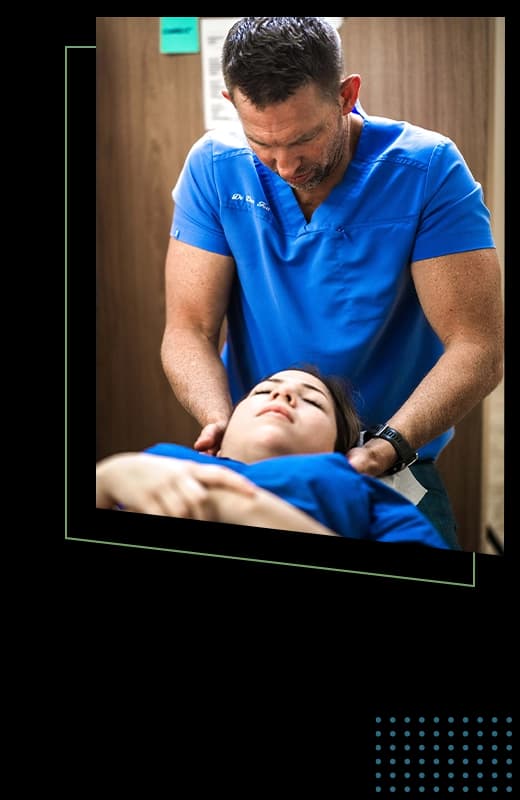
When you come to Pura Vida Chiropractic for your evaluation, I do not just crack your back and send you home. The SOT examination is one of the most thorough and precise diagnostic processes in chiropractic care.
First, I take a complete health history. Many of the questions on this health test become part of our conversation, along with your medical history, family history, lifestyle factors, and specific concerns.
Next, I perform a detailed physical examination using SOT-specific indicators. These include precise leg length measurements that reveal pelvic imbalance, specific postural assessments, range of motion testing, neurological screening, and palpation of the spine to identify areas of subluxation and muscle tension.
Based on these findings, I determine your SOT category — a classification system that tells me exactly how your body needs to be corrected. Category I involves the craniosacral system, Category II involves the pelvis and sacroiliac joints, and Category III involves disc-related issues. Each category has specific correction protocols that are tailored to your body's exact needs.
This precision is what sets SOT apart from other chiropractic techniques. There is no guesswork. There is no one-size-fits-all adjustment. Every correction is based on objective indicators that your body provides, and every visit includes reassessment to ensure we are making progress.
Why San Antonio Families Trust This Approach
Pura Vida Chiropractic has 18 documented patient outcomes on ChiropracticResults.com — providing documentation that our SOT approach delivers measurable, real-world results across a wide range of conditions.
For over 23 years, families across Castle Hills, Stone Oak, Alamo Heights, Leon Valley, Helotes, Shavano Park, and Boerne have trusted me with their spinal health. As a bilingual practitioner, I serve both English and Spanish-speaking communities with the same dedication and thoroughness.
The health test you just took is the same one I use in my office to help patients understand the connection between their symptoms and their spinal health. If your answers concern you, do not wait. The subluxations that are causing or contributing to your symptoms are not going to fix themselves. They will only get worse with time.
Frequently Asked Questions
Is this health test a medical diagnosis?
No. This health test is an educational tool designed to help you recognize symptoms that may be related to vertebral subluxation. It is not a substitute for a professional examination. If your results concern you, I encourage you to schedule a free spinal evaluation where I can perform a thorough, hands-on assessment of your spine and nervous system.
Can subluxations really cause all of these symptoms?
Yes. Your nervous system controls every function in your body. When subluxations interfere with nerve signals, the effects can manifest in virtually any system — digestive, respiratory, immune, cardiovascular, and musculoskeletal. This is why chiropractic patients often report improvements in symptoms they did not even come in for.
How quickly can I expect improvement after starting care?
Every patient is different, but many people notice improvements within the first few visits. Some symptoms — like headaches and sleep quality — often respond quickly. Others — like chronic digestive issues or long-standing joint pain — may take longer as the body unlearns years of compensatory patterns. During your initial evaluation, I will give you a realistic timeline based on your specific findings.
Ready to Experience Natural Healing? Book Your Free Evaluation
Pura Vida Chiropractic 2318 NW Military Hwy #103, San Antonio, TX 78231 📞 (210) 685-1994 🕐 Mon/Tue/Thu: 7:00 AM – 4:00 PM 👉 Book Free Evaluation