Text Neck Is Real: How Your Phone Is Damaging Your Spine
Text neck is one of the fastest-growing spinal conditions in San Antonio and across the country. Dr. Dan Foss explains what's happening to your spine when you look down at your phone — and how to fix it.
There's a structural crisis happening in slow motion across every age group — from teenagers to retirees — and almost nobody is talking about it with appropriate urgency.
It's text neck. And if you're reading this on your phone, you might already have it.
The Physics of Your Head on Your Spine
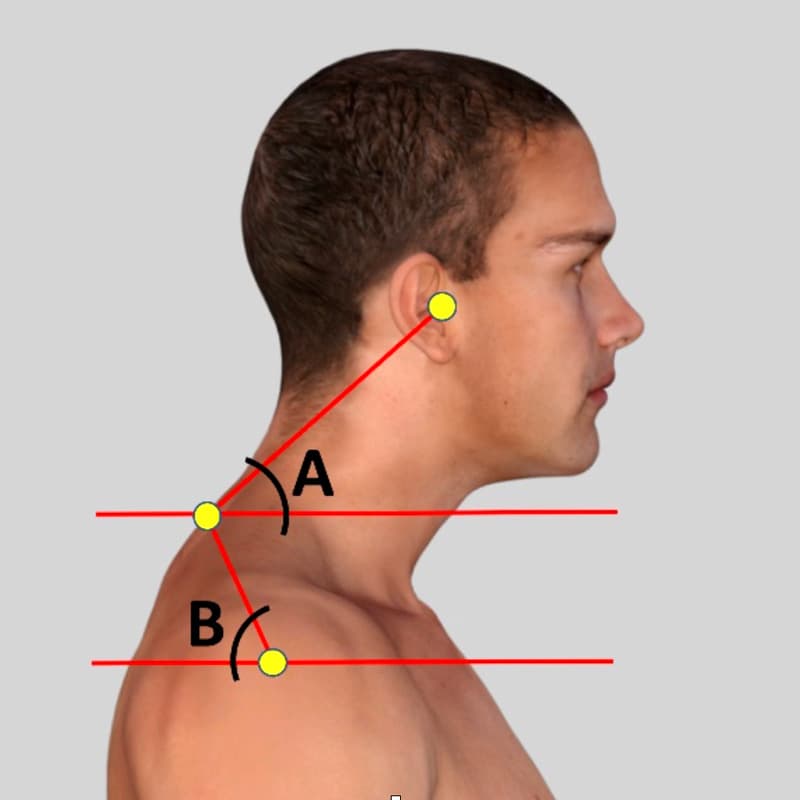
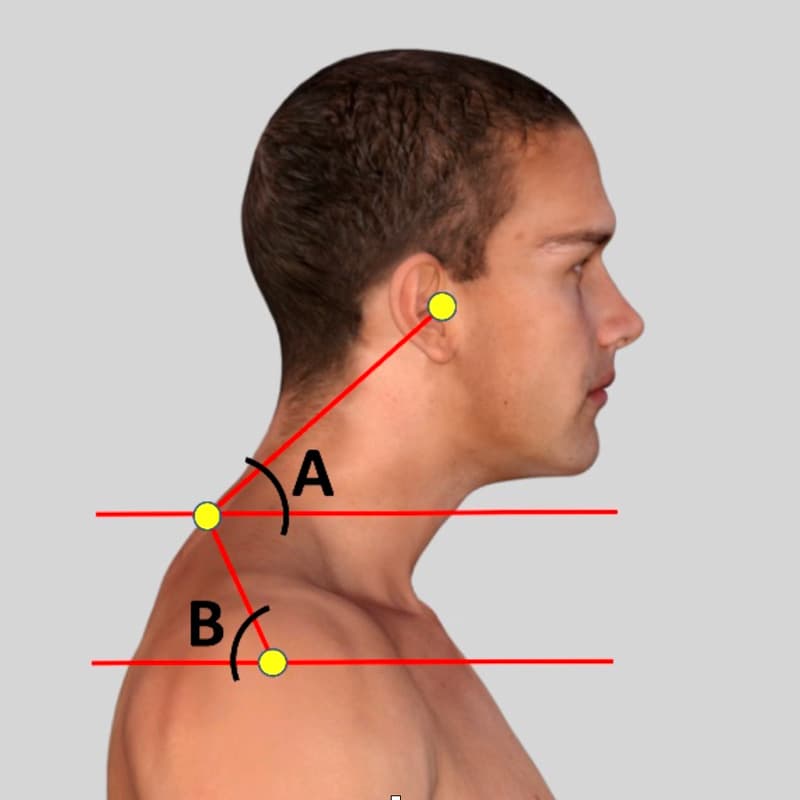
Your head weighs approximately 10 to 12 pounds in neutral position — resting directly over your shoulders, ears aligned with your shoulder joints. At this angle, your cervical spine supports the full weight of your skull with minimal muscular effort.
Now tilt your head forward 15 degrees. The effective load on your cervical spine jumps to around 27 pounds. At 30 degrees, it's 40 pounds. At 45 degrees — roughly the angle most people hold their phones — the force increases to approximately 49 pounds. At 60 degrees, you're looking at 60 pounds of effective load on a structure designed to comfortably handle 12.
We're talking about 5 to 6 times the normal load on your cervical spine, sustained for hours per day, every day.
What Happens Over Time
The human body adapts. That's one of its great strengths — and in this case, one of its great vulnerabilities.
Under the sustained load of forward head posture, several things happen:
The muscles at the back of the neck — the suboccipitals, the cervical extensors, the upper trapezius — become chronically shortened and tight as they constantly strain to hold the head from falling further forward. Meanwhile, the muscles at the front of the neck and the deep cervical flexors weaken from chronic underuse.
The cervical discs experience uneven compressive loading. Instead of pressure being distributed evenly across the disc surface, the anterior (front) portion of the disc bears disproportionate stress. Over time, this accelerates disc degeneration — the premature wearing down of the disc that normally takes decades of aging.
The cervical lordosis — the natural inward curve of the neck — begins to straighten or even reverse. This is called cervical kyphosis, and it's appearing in patients far younger than it used to. When Dr. Foss sees cervical X-rays, the loss of normal cervical curve has become almost routine, even in patients in their 20s and 30s.
The net result: chronic neck pain and stiffness, frequent headaches (particularly at the base of the skull), upper back tension, shoulder pain, and — in more advanced cases — numbness or tingling in the arms from nerve root irritation.
The Compounding Problem
Text neck doesn't happen in isolation. It compounds with other postural stressors. If you sit at a desk all day (which most San Antonio professionals do), your thoracic spine is also under stress from the prolonged flexed sitting position. The lumbar spine and pelvis are affected by how you're seated. The entire spine adapts to sustained postures — and text neck accelerates the dysfunction already being created by sedentary desk work.
This is why patients with text neck rarely come in complaining only of neck pain. They come in with neck pain, headaches, upper back pain, and often a vague sense that their whole spine just doesn't feel right. Because it doesn't.
Can It Be Fixed?
Yes — but it requires real structural correction, not just stretching and posture reminders.
Dr. Foss uses SOT chiropractic to address the full structural pattern created by forward head posture — from the pelvic base upward through the lumbar and thoracic spine to the cervical correction. Attempting to correct the neck in isolation without addressing the postural pattern below it produces limited, temporary results.
Cranial chiropractic is often valuable for text neck patients as well, particularly those with suboccipital headaches or symptoms suggesting upper cervical nerve irritation.
Class IV laser therapy accelerates recovery of the chronically strained cervical musculature and reduces the inflammation in degenerating discs.
Lifestyle modification is part of the equation too. Dr. Foss advises patients on ergonomic phone and computer positioning, exercises to strengthen the deep cervical flexors, and movement breaks that interrupt the sustained loading on the cervical spine.
The Earlier the Better
Text neck-driven degeneration is progressive. The damage to discs and the loss of cervical curve don't reverse without active intervention — and the longer the structural changes have been present, the more correction requires. Teenagers and young adults who are caught early have the best opportunity for complete correction. Patients in their 40s and 50s can still achieve significant improvement and prevent further deterioration.
If your neck aches when you look up after scrolling through your phone, that's your body sending a message worth listening to.
Ready to experience the difference?
Dr. Dan Foss and the Pura Vida team are accepting new patients. Call us at (210) 685-1994 or visit puravidasanantonio.com to schedule your first visit. We're open Monday, Tuesday, and Thursday 7am–4pm at 2318 NW Military Hwy #103, San Antonio, TX 78231.