Why Pregnancy Is the #1 Time for Chiropractic Care | San Antonio TX
Pregnancy puts unique demands on your spine and pelvis. Dr. Dan Foss explains why chiropractic care during pregnancy can ease pain, support an easier delivery, and protect your baby's positioning.

If you are pregnant in San Antonio and reading this, here is something I tell every mom who walks into Pura Vida Chiropractic for the first time: pregnancy is the single most important time of your life to be under chiropractic care. Not because you are broken. Because your body is doing something extraordinary, and it deserves support that matches that effort.
In 23 years of practice, I have seen the difference chiropractic care makes during pregnancy — for moms, for the birth experience, and for babies in those first weeks of life. Let me walk you through what is actually happening in your body, why chiropractic matters, and what to expect from prenatal care at our office.
What Pregnancy Actually Does to Your Body
From the moment of conception, your body begins a series of rapid biomechanical and hormonal shifts. Most pregnancy education focuses on what is happening to the baby. We focus on what is happening to the mother — because how you carry your pregnancy changes everything about how you experience it.
Here is what changes structurally:
- Your center of gravity shifts forward as the uterus grows, pulling your lumbar spine into greater curvature.
- Relaxin — a hormone that loosens ligaments to prepare for delivery — also loosens every other ligament in your body, making your pelvis, sacrum, and spine more mobile and more vulnerable to misalignment.
- Your pelvis widens and rotates to accommodate the baby and prepare for birth.
- Breast tissue increases, pulling the upper back and shoulders forward.
- Your ribcage flares outward to make room for the diaphragm as the uterus pushes upward.
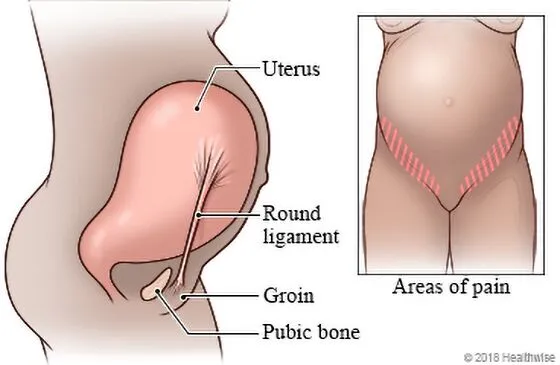
These changes are normal. They are also exactly why so many women experience back pain, sciatica, pelvic girdle pain, round ligament pain, and rib discomfort during pregnancy. The body is adapting beautifully — but those adaptations create new mechanical patterns that can lock in if no one helps your spine and pelvis stay balanced.
That is what chiropractic care during pregnancy does. We do not "treat" pregnancy. We support it.

What I Actually Do for Pregnant Patients
At Pura Vida, I use Sacro-Occipital Technique (SOT) as my foundational approach for prenatal care. SOT is gentle, low-force, and ideally suited to pregnancy because it does not involve high-velocity twisting or thrusts. Instead, it uses precisely placed wedge blocks and the patient's own gravity to bring the pelvis back into balance.
For most pregnant patients, I combine SOT with the Webster Technique — a specific chiropractic analysis and adjustment used to balance pelvic muscles, ligaments, and bones. Webster is best known for its association with helping breech babies turn, but its real purpose is broader: it removes constraint from the mother's pelvis so that the baby has the maximum room to assume an optimal birthing position.
I also use CMRT (Chiropractic Manipulative Reflex Technique) when needed to address visceral patterns — things like reflux, heartburn, and digestive discomfort that are common in late pregnancy.
Every adjustment is tailored to your stage of pregnancy. First trimester care looks different from third trimester care. We use specialized pregnancy pillows, side-lying positions, and modified table setups to keep you comfortable and your baby safe at every visit.
Common Conditions I See in Pregnant Patients
Most of my pregnant patients come in for one of these reasons:
- Lower back pain — by far the most common
- Sciatica — sharp pain shooting down the buttock and leg
- Pelvic girdle pain — pain in the front of the pelvis or sacrum
- Round ligament pain — sharp twinges in the lower abdomen
- Breech presentation — when the baby is positioned head-up after 32 weeks
- Headaches — driven by upper-cervical tension and hormonal shifts
- Heartburn and reflux — from the diaphragm being compressed
In every case, the goal is not to mask the pain. It is to find the structural pattern producing it and correct that pattern so the body can adapt without breaking down.
Is Chiropractic Care Safe During Pregnancy?
Yes — when performed by a chiropractor trained in prenatal techniques, chiropractic care is one of the safest forms of care available during pregnancy. There are no medications, no surgical risks, and no side effects beyond temporary mild soreness in some patients.
I have safely cared for pregnant patients in their first trimester all the way through 41 weeks. The key is technique. SOT and Webster are both designed with the pregnant body in mind. They use the lightest force consistent with restoring proper motion. There are no twisting maneuvers, no abdominal pressure, and no positions that would compromise the uterus or baby.
If you have specific concerns — such as a history of preterm labor, placenta previa, or another medical complication — bring them up at your free consultation. I work alongside midwives, OBs, and birth doulas across San Antonio, and I will refer back to your provider any time the situation warrants it.
What Happens After Delivery
Postpartum care is just as important as prenatal care, and I do not want any new mom to forget this. Your pelvis spent nine months opening up to make room for your baby. After birth, it has to rebalance and find its way back to a stable, neutral position. That process does not always happen on its own — and the residual misalignments are often the source of postpartum back pain, hip pain, and even pelvic floor symptoms that women carry for years.
I encourage every postpartum mom to come in for at least a few visits in the first few months after birth. The earlier we restore balance, the easier the recovery — and the better positioned you are physically and energetically for the demands of motherhood.
While we are on it, your baby is welcome at every visit. I have been adjusting newborns for 23 years. The same gentle SOT approach we use on you can be used on your baby, and many of the most common newborn issues — colic, reflux, latching difficulty, head shape concerns, sleep problems — respond beautifully to early chiropractic care.
What to Expect at Your First Visit
If you have never seen a chiropractor during pregnancy, here is exactly what happens at Pura Vida:
- Free consultation in our office. No exam, no charge. We sit down and talk through your concerns, your history, and where you are in your pregnancy. If chiropractic care is the right fit, we move to step two. If it is not, I will help connect you with the right provider.
- Comprehensive exam. A thorough orthopedic, neurological, and physical examination tailored to pregnancy. I look at your pelvis, spine, and posture. Digital X-rays are reserved for non-pregnant patients, so we use clinical assessment alone during pregnancy.
- Personalized care plan. I review the findings with you, explain what I am seeing, and design a care plan that meets you where you are. Care begins only when you are ready.
We are bilingual — English and Spanish — and serve moms from Stone Oak, Castle Hills, Alamo Heights, Helotes, and across San Antonio.
Ready to Start?
Call (210) 685-1994 or book your free consultation online. If you are pregnant or trying to conceive, this is the visit that may matter most. There is no pressure, no commitment to treatment — just a conversation about whether what we do is right for you.
You are not just pregnant. You are building a person. Let us help you do it as easily as your body was designed to.