Sports Injury Chiropractor San Antonio: Complete Guide | Dr. Dan Foss
Complete guide to sports injury chiropractic care in San Antonio. Dr. Dan Foss covers common sports injuries, performance enhancement, youth sports, return to play, and SOT chiropractic for athletes.

On this page
Chiropractic care is one of the most effective treatments for sports injuries — and one of the most powerful tools for preventing them. After 23 years of treating athletes in San Antonio, from high school football players to weekend warriors to competitive triathletes, I have seen firsthand how SOT chiropractic care at Pura Vida Chiropractic not only accelerates injury recovery but measurably improves athletic performance.
This guide covers everything San Antonio athletes need to know about sports injury chiropractic — from the most common injuries I treat, to how chiropractic enhances performance, to what parents need to know about youth sports injuries. Whether you train in Alamo Heights, compete in the Dominion, run trails in Stone Oak, or play pickup basketball in Leon Valley, this is your comprehensive resource.
What Sports Injuries Does a Chiropractor Treat?
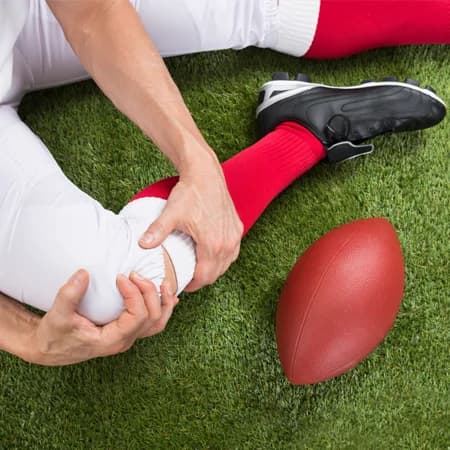
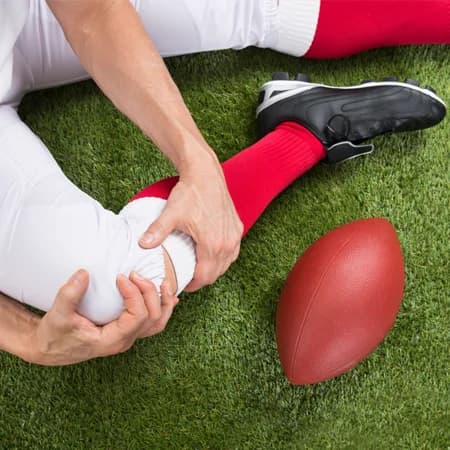
A chiropractor treats spinal injuries (back, neck, mid-back pain), shoulder injuries (rotator cuff, impingement), knee injuries (runner's knee, IT band), joint sprains and strains, tendonitis and overuse injuries, and post-concussion syndrome. The musculoskeletal system is our specialty, and sports injuries predominantly affect these structures. Here are the most common sports injuries I treat at Pura Vida Chiropractic:
Spinal injuries. Back pain, neck pain, and mid-back pain are extremely common in athletes across all sports. The repetitive loading, rotational forces, and impact inherent in athletics create spinal misalignments, disc injuries, facet irritation, and muscle strain. Football linemen, golfers, tennis players, CrossFit athletes, and runners are particularly susceptible.
Shoulder injuries. The shoulder is the most mobile joint in the body, and that mobility comes with vulnerability. Rotator cuff strains and tears, impingement syndrome, labral injuries, and shoulder instability are among the most common sports injuries I see. Overhead athletes — baseball players, swimmers, volleyball players, tennis players — are at highest risk. Chiropractic evaluation of the shoulder includes assessment of the cervical spine and thoracic spine, because restrictions in these areas directly affect shoulder mechanics.
Knee injuries. Runners' knee (patellofemoral pain syndrome), IT band syndrome, meniscus injuries, and ligament sprains are extremely common in running, cycling, basketball, soccer, and football. What many athletes and even some healthcare providers miss is that many knee problems originate from biomechanical dysfunction in the pelvis, hip, or ankle — not the knee itself. SOT's whole-body approach identifies and corrects these upstream causes.
Joint pain and dysfunction. Ankles, wrists, elbows, and hips are all subject to sports-related sprains, strains, and overuse injuries. Chiropractic extremity adjusting restores proper joint mechanics, reduces inflammation, and accelerates healing. I frequently treat ankle sprains, tennis elbow, golfer's elbow, hip impingement, and wrist injuries in San Antonio athletes.
Tendonitis and overuse injuries. Tendonitis — inflammation or degeneration of a tendon — is the hallmark overuse injury. Achilles tendonitis, patellar tendonitis, rotator cuff tendonitis, and plantar fasciitis affect athletes who train with high volume, high intensity, or poor biomechanics. Chiropractic care addresses the biomechanical dysfunction that causes the tendon to be overloaded, while regenerative therapies reduce inflammation and promote tissue repair.
Post-concussion syndrome. Concussions are a serious concern in contact sports, and the aftermath can be debilitating. Persistent headaches, dizziness, brain fog, neck pain, and cognitive difficulties following a concussion often have a cervical spine and cranial component. SOT cranial work is specifically designed to address the cranial and upper cervical dysfunction that contributes to post-concussion symptoms.
How Does Chiropractic Care Improve Athletic Performance?
Chiropractic care improves athletic performance by restoring full range of motion, optimizing nervous system function for faster reaction time and coordination, improving biomechanical efficiency so you use less energy per movement, accelerating recovery between training sessions, and preventing injuries caused by structural imbalances. Professional and Olympic athletes have relied on chiropractic care for decades for exactly these reasons.
Here is how each factor works:
Improved range of motion. Restricted joints limit movement. When a hip does not fully extend, your stride length decreases. When a thoracic spine segment does not rotate properly, your golf or tennis swing loses power. Chiropractic adjustments restore full range of motion to every joint in the kinetic chain, allowing movement patterns to function at their biomechanical ideal.
Enhanced nervous system function. The nervous system controls every muscle contraction, every proprioceptive response, every coordination pattern in your body. Spinal misalignments — even subtle ones that produce no pain — interfere with nerve signal transmission. Correcting these subluxations optimizes the speed and accuracy of neural communication, which translates directly to improved reaction time, coordination, balance, and power output.
Better biomechanical efficiency. When your pelvis is balanced, your spine is properly aligned, and your joints move freely, your body distributes force more efficiently. You use less energy to produce the same movement. For endurance athletes, this means you can go farther and faster with the same effort. For power athletes, it means more force generation with less energy waste.
Faster recovery between training sessions. Proper alignment reduces the mechanical stress on muscles, tendons, and ligaments during training. This means less microtrauma, less inflammation, and faster recovery. Athletes under regular chiropractic care consistently report that they recover more quickly between workouts and feel less accumulated fatigue during heavy training blocks.
Injury prevention. Biomechanical imbalances are the root cause of most overuse injuries. When the pelvis is tilted, one leg effectively becomes shorter than the other, and the knee, ankle, and hip on that side bear asymmetric load. Over thousands of running strides, this asymmetry produces injury. Correcting the imbalance before injury occurs is the most effective prevention strategy available.
What Should Athletes Know About Youth Sports Injuries?
Athletes and parents should know that young bodies have vulnerable growth plates that respond differently to injury than adult bones, that sport specialization has created an epidemic of preventable overuse injuries, and that minor misalignments during growth years can become major structural problems by adulthood if uncorrected. Youth sports injuries present unique challenges that differ significantly from adult injuries.
Young bodies are different. Children and adolescents have growth plates (epiphyseal plates) — areas of developing cartilage near the ends of long bones where growth occurs. These growth plates are weaker than the surrounding bone and are vulnerable to injury. An injury that would cause a ligament sprain in an adult may cause a growth plate fracture in a child. Proper evaluation by a provider who understands pediatric musculoskeletal anatomy is essential.
Overuse injuries are epidemic. The trend toward sport specialization — playing one sport year-round from an early age — has created an epidemic of overuse injuries in young athletes. Little League elbow, Osgood-Schlatter disease, Sever's disease, stress fractures, and early-onset tendonitis are increasingly common. These injuries are almost entirely preventable with proper biomechanics, training variation, and regular chiropractic evaluation.
Early intervention prevents long-term problems. A spinal misalignment or biomechanical imbalance that is minor in a 12-year-old can become a significant structural problem by age 18 if it is not corrected. The body grows around its existing alignment. If that alignment is off, the growth pattern will be off. Regular chiropractic checkups during the growing years are one of the best investments parents can make in their child's long-term musculoskeletal health.
Concussions require specialized care. Youth athletes are more susceptible to concussions and take longer to recover from them. The SOT cranial assessment I perform evaluates cranial bone motion, dural tension, and upper cervical alignment — all of which are frequently disrupted by concussion and all of which can prolong recovery if not addressed.
I encourage parents in Castle Hills, Alamo Heights, Stone Oak, and across San Antonio to bring their young athletes in for evaluation — especially if they play contact sports, have recently started a new sport, or are experiencing any pain or performance issues.
How Does Chiropractic Help with Return to Play After Injury?
Chiropractic helps with return to play by ensuring the entire kinetic chain is functioning properly — not just that pain is gone — through functional assessment, progressive loading protocols, performance benchmarking against pre-injury baselines, and injury-specific prevention strategies. Premature return to play without this comprehensive evaluation is one of the most common reasons athletes suffer re-injury.
At Pura Vida Chiropractic, our return-to-play approach includes:
Functional assessment. Before clearing an athlete to return, I evaluate not just whether the injury site is healed, but whether the entire kinetic chain is functioning properly. A healed hamstring does not help you if your pelvis is still misaligned and loading that hamstring asymmetrically. Full biomechanical assessment ensures that the conditions that led to the injury have been corrected.
Progressive loading protocols. Return to play is graduated. We begin with low-intensity, sport-specific movements and progressively increase intensity, volume, and complexity based on how the athlete responds. Each step is evaluated before advancing to the next.
Performance benchmarking. We compare the athlete's post-injury function to their pre-injury baseline (when available) or to sport-specific norms. Range of motion, strength, reaction time, and movement quality are all assessed. The goal is not just return to pre-injury performance, but optimization beyond it.
Injury-specific prevention strategies. Every injury reveals a vulnerability. Once an athlete returns to play, we implement prevention strategies — specific exercises, movement corrections, equipment modifications, and regular chiropractic maintenance — to reduce the risk of re-injury.
What Makes SOT Chiropractic Ideal for Athletes?
SOT is ideal for athletes because it offers the most comprehensive pelvic correction system in chiropractic (the pelvis is the foundation of all athletic movement), includes detailed extremity adjusting for every joint in the kinetic chain, provides cranial techniques for concussion and performance optimization, and is gentle enough to use even during acute injury phases. SOT chiropractic goes beyond what conventional chiropractic offers in several key ways.
Precision pelvic correction. The pelvis is the foundation of athletic movement. Running, jumping, throwing, kicking, cutting — every athletic movement originates from or transfers force through the pelvis. SOT's classification and correction system for pelvic dysfunction is the most comprehensive in chiropractic. When your pelvis is balanced, everything above and below it functions better.
Extremity adjusting. SOT includes detailed protocols for evaluating and adjusting every joint in the body — shoulders, elbows, wrists, hips, knees, ankles, and feet. Athletes rarely injure just one structure, and sports injuries frequently involve multiple joints in a kinetic chain. SOT addresses the entire chain.
Cranial work for concussion and performance. SOT cranial techniques are relevant to athletes in two ways. First, they are the primary tool for addressing post-concussion dysfunction. Second, optimal cranial function supports optimal nervous system performance — including reaction time, coordination, and balance.
Gentle enough for acute injuries. Some athletes avoid chiropractic care because they have had aggressive adjustments that flared their pain. SOT techniques can be as gentle as needed — using positioning, blocks, and the body's own weight — without sacrificing effectiveness. This makes it appropriate even for acutely injured athletes.
Systematic progress tracking. SOT's indicator system objectively tracks improvement from visit to visit. For athletes, this provides clear evidence that treatment is working and informs return-to-play decisions with clinical data rather than guesswork.
These athletic results are documented. Among our 18 documented patient outcomes on ChiropracticResults.com, a rotator cuff patient went from 8/10 pain to 0/10 in one month, a patient with five simultaneous knee conditions went from 8/10 to 0/10 in just eight sessions, and a runner with bilateral Achilles tendonitis went from 10/10 to 2/10.
Which Sports Produce the Most Injuries in San Antonio?
Football produces the most injuries by far, followed by running and trail running, CrossFit and functional fitness, golf and tennis, basketball and soccer, and cycling. Based on my 23 years of practice, here is a breakdown of each sport's most common injuries:
Football. San Antonio's football culture — from youth leagues to high school powerhouses to college and military programs — produces a constant stream of spinal injuries, shoulder injuries, knee injuries, and concussions. The combination of high-speed collision, repetitive contact, and extreme physical demands makes football the single highest-injury sport I treat.
Running and trail running. San Antonio's extensive trail system (including the Mission Trail, the Leon Creek Greenway, and Government Canyon) and year-round running weather make this one of the most popular fitness activities in the area. Running-related injuries — knee pain, hip pain, plantar fasciitis, IT band syndrome, stress fractures — are among the most common conditions in my practice.
CrossFit and functional fitness. The explosive, high-intensity, multi-joint movements in CrossFit create both performance gains and injury risk. Shoulder injuries, low back injuries, and knee injuries from improper form or excessive loading are common.
Golf and tennis. The rotational demands of these sports concentrate stress on the thoracic and lumbar spine, shoulders, elbows, and wrists. Golfer's elbow, tennis elbow, rotator cuff injuries, and spinal pain are the most frequent presentations.
Basketball and soccer. Ankle sprains, knee injuries (particularly ACL), and back pain are common in these cutting and jumping sports.
Cycling. Road cycling and mountain biking are popular in the Hill Country. Neck pain, lower back pain, and overuse injuries of the hips and knees are the most common cycling-related complaints.
Whether your sport is listed here or not, if you are experiencing pain, decreased performance, or recurring injuries, a chiropractic evaluation can identify the biomechanical factors contributing to the problem.
How Do I Choose the Right Sports Chiropractor in San Antonio?
Choose a sports chiropractor with advanced certifications beyond the basic degree, specific experience treating athletes, a whole-body evaluation approach (not just the pain site), multiple treatment modalities, and clear communication about your diagnosis and return-to-play timeline. Not all chiropractors are equally equipped to handle sports injuries, so here is what each criterion means:
Advanced training. Look for a chiropractor with advanced certifications beyond the basic degree. My Advanced SOT certification through SORSI represents hundreds of hours of postgraduate training in structural evaluation and correction.
Experience with athletes. Ask about the chiropractor's experience treating sports injuries specifically. A chiropractor who primarily treats general back pain may not have the expertise to evaluate and manage a complex sports injury involving multiple joints and kinetic chains.
Comprehensive evaluation. A sports chiropractor should evaluate your entire body — not just the area where it hurts. If you have knee pain and the chiropractor only looks at your knee, they are missing the bigger picture.
Whole-body treatment approach. The best sports chiropractors use multiple modalities — adjustments, soft tissue therapy, rehabilitative exercises, and regenerative therapies — tailored to your specific injury and sport.
Communication. Your chiropractor should explain your diagnosis, treatment plan, and return-to-play timeline in language you understand. You should never leave a visit wondering what is wrong or what the plan is.
At Pura Vida Chiropractic, athletes from Alamo Heights, the Dominion, Boerne, and across San Antonio choose us because of our combination of advanced training, comprehensive evaluation, whole-body treatment approach, and genuine understanding of what athletes need.
How Can Athletes Prevent Injuries with Chiropractic Care?
Athletes prevent injuries through regular chiropractic maintenance visits every two to four weeks during season, pre-season biomechanical screening, sport-specific prehabilitation exercises, proper warm-up and cool-down habits, and smart training load management. Prevention is always better than treatment, and here is how each strategy works:
Regular chiropractic maintenance. Even when you feel great, regular chiropractic evaluations catch biomechanical imbalances before they produce pain or injury. Most competitive athletes benefit from visits every two to four weeks during their season.
Pre-season screening. A comprehensive biomechanical evaluation before your season begins identifies weaknesses, imbalances, and restrictions that could become problems under the stress of competition. This is especially important for youth athletes.
Sport-specific prehabilitation. Based on your sport's demands and your individual biomechanics, I prescribe specific exercises designed to strengthen vulnerable areas and improve movement patterns. This is not generic stretching — it is targeted work based on your body's specific needs.
Proper warm-up and cool-down. Dynamic warm-ups before training and static stretching after training are fundamental but frequently skipped. These habits alone significantly reduce injury risk.
Training load management. Overtraining is a leading cause of sports injuries. Gradual, progressive increases in training volume and intensity — the 10 percent rule — allow tissues to adapt without breakdown.
Nutrition and hydration. Proper nutrition supports tissue repair, energy production, and immune function. Hydration affects every physiological process, including muscle contraction, joint lubrication, and recovery. These are not add-ons — they are foundational to injury prevention.
Book your athletic evaluation today and discover how chiropractic care can transform your performance and keep you doing what you love.
Frequently Asked Questions About Sports Chiropractic
Can chiropractic care help even if I am not injured?
Absolutely. Performance optimization is a major reason athletes seek chiropractic care. Even subtle misalignments that produce no pain can reduce range of motion, impair nervous system function, and limit performance. Many elite athletes receive regular adjustments as part of their training regimen.
Is chiropractic safe for young athletes?
Yes. Chiropractic care is very safe for children and adolescents when performed by a practitioner experienced with pediatric patients. The techniques I use for young athletes are modified for their age, size, and developmental stage. SOT is particularly well-suited for youth patients because of its gentle, low-force approach.
How soon after a sports injury should I see a chiropractor?
As soon as possible. Early evaluation and treatment produce better outcomes. If you suspect a fracture, dislocation, or severe ligament tear, visit the ER first for imaging. For all other sports injuries — sprains, strains, joint pain, back pain, neck pain — a chiropractic evaluation within the first 24 to 48 hours is ideal.
Do professional athletes use chiropractic care?
Yes — extensively. Every NFL team has a chiropractor on staff or on retainer. Professional athletes in the NBA, MLB, NHL, PGA, UFC, and Olympic sports regularly use chiropractic care for both injury treatment and performance optimization. Tiger Woods, Michael Jordan, Tom Brady, and Usain Bolt are among the elite athletes who have credited chiropractic care as part of their success.
Ready to Experience Natural Healing? Book Your Free Evaluation
Pura Vida Chiropractic 2318 NW Military Hwy #103, San Antonio, TX 78231 📞 (210) 685-1994 🕐 Mon/Tue/Thu: 7:00 AM – 4:00 PM 👉 Book Free Evaluation