Trigeminal Neuralgia & Chiropractic: A Cranial SOT Approach | San Antonio TX
Trigeminal neuralgia is called 'the suicide disease' for a reason. Dr. Dan Foss explains why standard care fails some patients and how cranial SOT chiropractic addresses the trigeminal nerve at its source — with a verified 100% pain-relief outcome documented in San Antonio.
On this page
You are washing your face, or brushing your teeth, or feeling the breeze on your cheek — and a lightning bolt rips through the side of your face. It lasts seconds, but it is so violent that you freeze. You stop chewing on that side. You stop talking on the phone with that ear up. You start avoiding wind, cold water, a kiss on the cheek from your kid. The attacks come more often. Your dentist finds nothing. Your ENT finds nothing. Someone finally says the words: trigeminal neuralgia.
If that is your life — or your mother's, or your sister's — I want you to know two things. First, you are not imagining it, and you are not alone. Second, the standard treatment path is not the only path. Learn more about our cranial chiropractic approach and SOT chiropractic care.
I am Dr. Dan Foss, DC, of Pura Vida Chiropractic in San Antonio. After 23 years in practice, a recent trigeminal neuralgia case I treated has been documented as a 100% pain-relief outcome and is documented on the third-party clinical outcomes registry ChiropracticResults.com. I want to explain what trigeminal neuralgia actually is, why so many patients are failed by the standard playbook, and how cranial SOT chiropractic addresses the trigeminal nerve at its mechanical source.
What Trigeminal Neuralgia Actually Is
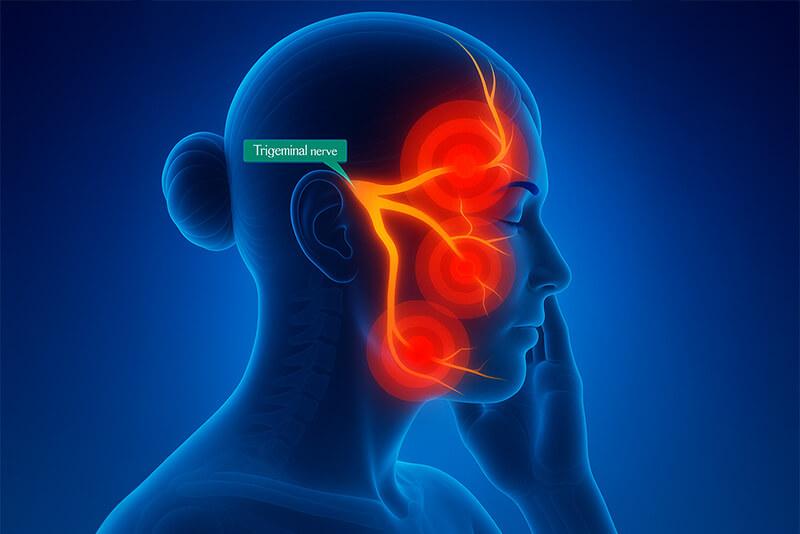
Trigeminal neuralgia (TN) — diagnostic code ICD-10 G50.0 — is a chronic neuropathic pain disorder of the fifth cranial nerve, the trigeminal. The trigeminal nerve is the largest cranial nerve. It carries sensation from your entire face: forehead, cheek, jaw, lips, teeth, gums, the front two-thirds of your tongue, even the lining of your sinuses. It also drives the muscles you chew with.
When that nerve becomes irritated or compressed, it does not produce a dull ache. It produces what patients consistently describe as the worst pain they have ever felt. Words like stabbing, electric, lightning, ice pick, being shocked show up over and over.
The classic features:
- Sudden, severe, electric-shock-like pain in one side of the face
- Pain in one or more of the three trigeminal branches — V1 (forehead/eye), V2 (cheek/upper jaw), V3 (lower jaw)
- Attacks triggered by light touch, chewing, brushing teeth, washing the face, wind, cold air, talking, smiling
- Episodes lasting from a second to two minutes, sometimes in volleys
- Pain-free intervals that may last hours, days, or weeks — then a return that is often worse
- Almost always one-sided
- More common in women, more common after age 50, but absolutely seen in younger adults
Neurologists call it "the suicide disease." That is not a marketing phrase — it is the historical clinical nickname, given because the suicide rate among patients with untreated or poorly controlled TN is documented to be significantly higher than baseline. When you cannot eat, sleep, or be touched on the face without triggering a lightning strike, your quality of life collapses. Patients have told me they were afraid to brush their hair on that side. They were afraid of the air conditioning vent in their car.
This is the condition we are talking about.
Why the Standard Playbook Fails Some Patients
When a patient is diagnosed with TN, the conventional treatment ladder is roughly this:
- Anticonvulsants — usually carbamazepine (Tegretol) or oxcarbazepine, sometimes gabapentin or pregabalin. These calm hyperexcitable nerves. For many patients, they work — for a while. For others, side effects (sedation, dizziness, liver enzyme changes, low sodium, rash) limit the dose long before the pain is controlled.
- Muscle relaxants and tricyclics added in if the first line is not enough.
- Botox injections to the trigger branches.
- Microvascular decompression (MVD) — a craniotomy in which a neurosurgeon places a small sponge between the trigeminal nerve and the artery pressing on it at the brainstem. Often effective, but it is brain surgery.
- Gamma Knife radiosurgery, percutaneous balloon compression, radiofrequency rhizotomy, glycerol injection — various ablation procedures that intentionally damage part of the nerve to silence it. They trade pain for numbness, and the pain can return as the nerve regenerates.
These interventions are real medicine. They help people. But they share a problem: none of them address the trigeminal nerve as a structurally compressed, mechanically irritated cranial nerve that lives in a skull that may itself be the source of the compression.
If the cranial bones the nerve passes through are restricted — if the upper cervical spine is rotated and pulling on the brainstem — if the dural membrane the nerve is wrapped in is under asymmetric tension — drugs and ablation will never fix that. They can only quiet the symptom.
That is the gap. And that is exactly where cranial SOT chiropractic does something different.
The Anatomy Most People Have Never Heard
To understand the chiropractic angle, you have to understand where the trigeminal nerve lives.
The trigeminal nerve emerges from the pons, in the brainstem. From there, its sensory root travels forward and rests in a small bony cave called Meckel's cave, where the trigeminal ganglion (also called the Gasserian ganglion) sits. From the ganglion, three branches fan out:
- V1 (ophthalmic) exits the skull through the superior orbital fissure in the sphenoid bone
- V2 (maxillary) exits through foramen rotundum in the sphenoid bone
- V3 (mandibular) exits through foramen ovale, also in the sphenoid bone
Notice the pattern. Every branch of the trigeminal nerve passes through the sphenoid. The sphenoid is the central bone of the skull, articulating with almost every other cranial bone. It is also the bone most affected by what cranial practitioners call sphenobasilar dysfunction — a torsion, sidebending, or compression pattern at the joint between the sphenoid and the occiput.
If the sphenoid is rotated, sidebent, or compressed at the sphenobasilar synchondrosis, the foramina the trigeminal branches pass through are mechanically distorted. The nerve has less room. Surrounding venous drainage is impaired. The dural sleeve around the ganglion becomes asymmetrically tensioned. The result is exactly what a TN patient experiences: a nerve that is being mechanically irritated and is firing inappropriately.
Now add the upper cervical spine. The C1 (atlas) and C2 (axis) vertebrae sit directly under the occiput. The spinal trigeminal nucleus — the brainstem hub that processes trigeminal pain signals — actually extends downward into the upper cervical spinal cord. The trigeminal nucleus and the upper cervical nerves are functionally one system. This is called the trigeminocervical complex, and it is well-established in the headache literature.
What that means in plain English: if your C1-C2 is misaligned, your trigeminal pain processing is affected. Not theoretically. Anatomically.
And finally, the vagus nerve (cranial nerve X) exits the skull through the jugular foramen, between the occiput and the temporal bone. Vagal tone governs your parasympathetic nervous system — your body's ability to calm itself, reduce inflammation, and downregulate pain. When the occiput, temporal bone, or upper cervical spine is restricted, vagal tone drops, and any neuropathic pain syndrome gets harder for the body to manage.
So the chiropractic picture of trigeminal neuralgia is not vague. It is specific: sphenobasilar dysfunction compressing the trigeminal foramina, upper cervical subluxation amplifying trigeminal pain processing through the trigeminocervical complex, and reduced vagal tone leaving the nervous system unable to regulate the pain.
That picture is treatable.
Why SOT and Cranial Work Specifically
I want to be precise about why this approach matters for TN, because most chiropractic does not address it.
The vast majority of chiropractors are trained primarily in diversified spinal manipulation — high-velocity, low-amplitude adjustments of the spine. That is a useful tool. But it is not designed to address sphenobasilar dysfunction, cranial suture restriction, or the dural tension patterns that compress cranial nerves.
Sacro-Occipital Technique (SOT) is different. SOT was developed by Dr. M.B. DeJarnette specifically to address the relationship between the sacrum and the occiput through the dural membrane system. It treats the body as a connected hydraulic and neurological unit. SOT uses wedge blocks under the pelvis to allow gravity to make precise corrections, gentle cranial work on the bones of the skull, and Chiropractic Manipulative Reflex Technique (CMRT) to address visceral and neurological reflexes.
I am the only Advanced SOT-certified chiropractor in San Antonio, and one of a relatively small number of practitioners worldwide who have completed the full Advanced SOT curriculum through SORSI, including mastery of CMRT organ adjusting and SOT Craniopathy. That training matters for trigeminal neuralgia specifically because the protocol I run for facial pain involves:
- Full SOT category assessment to identify the dominant pelvic-occipital pattern driving dural tension. You cannot effectively adjust the skull if the sacrum is feeding the dysfunction from below.
- Sphenobasilar correction — gentle, targeted cranial work to release torsion, sidebending, or compression at the sphenobasilar joint. This directly affects the foramina through which the trigeminal branches exit.
- Specific cranial suture work on the sphenoid, temporal, occiput, and frontal bones to restore normal cranial motion and reduce dural strain on the trigeminal ganglion.
- Precise upper cervical correction at C1-C2 to address the trigeminocervical complex and improve vagal tone.
- CMRT on related reflexes when indicated — the trigeminal system does not exist in isolation, and visceral or hormonal contributors to neural inflammation often need attention.
- Low-force, gentle technique throughout. TN patients cannot tolerate aggressive manipulation. The trigger zones on the face mean that even an enthusiastic head turn can set off an attack. SOT is fundamentally gentle work, which is exactly what this nervous system needs.
This is not a generic "chiropractic adjustment." It is a protocol built around the specific anatomy of the condition.
The Verified Outcome
I want to be careful here because of patient privacy. The case I am referring to is not described with any identifying details — the patient profile, the clinical course, the verification, and the outcome score are all documented on a third-party clinical registry, not on this page.
What I can tell you is this: a patient who fits the typical TN profile presented to my office with a confirmed diagnosis of trigeminal neuralgia (ICD-10 G50.0). After a course of care using the SOT and cranial protocol described above, the outcome was documented as 100% pain relief and is published on ChiropracticResults.com, a third-party platform that documents and verifies clinical outcomes from chiropractic offices nationwide.
You can read the verified case here:
Verified Outcome: Trigeminal Neuralgia (ICD-10 G50.0), 100% Pain Relief, San Antonio →
A few words about what this means and does not mean.
It does not mean I cure trigeminal neuralgia. Nobody can promise that. TN has multiple potential causes — true vascular compression at the nerve root, multiple sclerosis-related demyelination, post-herpetic neuralgia, tumor, idiopathic. Not every case will respond to structural correction, and serious medical workup remains essential.
It does mean that for the right patient — TN driven primarily by cranial and upper cervical mechanical dysfunction — the response to precise structural work can be complete. That is not a theoretical claim. It is a verified clinical outcome.
If your TN has been called "atypical" or "idiopathic," if your imaging did not show clear vascular compression, if your symptoms started after a head or neck injury, dental work, whiplash, or a fall — you may be exactly the patient profile this approach is built for.
The Patient Archetype I Most Often See
Most of my facial pain patients fit a recognizable pattern:
- Woman, age 30s to 60s, sometimes older
- Treatment-resistant or partially-responsive to carbamazepine or gabapentin
- Often has a history of dental procedures, oral surgery, or wisdom-tooth extraction before symptoms began
- Sometimes a remembered head or neck injury — a car accident, a fall, a sports impact, a whiplash
- Frequently coexisting TMJ dysfunction, bruxism, or chronic neck pain
- Sometimes a history of migraine or cluster headache
- Has been to multiple specialists — dentist, ENT, neurologist, oral surgeon — without lasting relief
- Has been told the next step is MVD, gamma knife, or simply higher doses of medication
- Is exhausted, scared, and beginning to plan her life around avoiding the next attack
If that is you, the question worth asking before a craniotomy or a permanent ablation is: has anyone evaluated the structural mechanics of the skull and upper cervical spine through which this nerve actually travels? In most cases the answer is no. Standard neurology does not look at it. Standard dentistry does not look at it. Even most chiropractors do not look at it. Cranial SOT does.
What to Expect From an Evaluation at Pura Vida
If you decide to come in, here is the process:
The free consultation. A conversation, not an adjustment. We sit down and you tell me your full story — when the pain started, what triggers it, what medications you have tried, what imaging and workup has been done, what specialists you have seen. I ask the questions that help me understand whether the pattern is consistent with structural involvement.
The exam. If we both decide it makes sense to proceed, the next visit is a detailed structural exam. SOT category testing. Palpation of the cranial bones — sphenoid, temporal, occiput, frontal, parietal — to identify restriction patterns. Upper cervical assessment. Range of motion. Neurological screening of all three trigeminal branches. Imaging if needed.
The plan. I explain what I find, in language that makes sense, and tell you honestly whether I think structural care has a reasonable chance of helping. If the picture is not consistent with a mechanically-driven TN, I will tell you that and refer you back to your neurologist. I do not take on cases I do not believe I can help.
The care. If we proceed, the work is gentle. SOT blocks under the pelvis. Light, specific cranial contacts. Gentle upper cervical correction. No aggressive twisting, no high-velocity neck cracks. Most TN patients can tolerate the protocol comfortably, and most will know within a few weeks whether their nervous system is responding.
Coordination with your medical team. I am not asking you to stop your medication. Medication taper, if appropriate, is something you discuss with your prescribing doctor as your pain improves. I am happy to communicate with your neurologist, your dentist, your TMJ specialist. Best outcomes come when everybody is rowing in the same direction.
A Note on Honesty
I will not promise you the same outcome documented on ChiropracticResults.com. Every case is different. What I will promise is a straight evaluation, a clear explanation of what I find, and a treatment plan that addresses the anatomy of your condition rather than just managing the symptom.
If I can help you, I will tell you. If I cannot, I will tell you that too, and help you think through your next step.
Internal Links
For deeper background on the techniques and anatomy referenced above:
- SOT Chiropractic — what Sacro-Occipital Technique is and how it works
- Cranial Chiropractic — SOT Craniopathy explained
- Sphenobasilar Synchondrosis: The Most Important Joint You've Never Heard Of
- Dural Tension: The Hidden Force Pulling Your Spine Out of Alignment
- Bruxism & Chiropractic Care — the TMJ/jaw connection
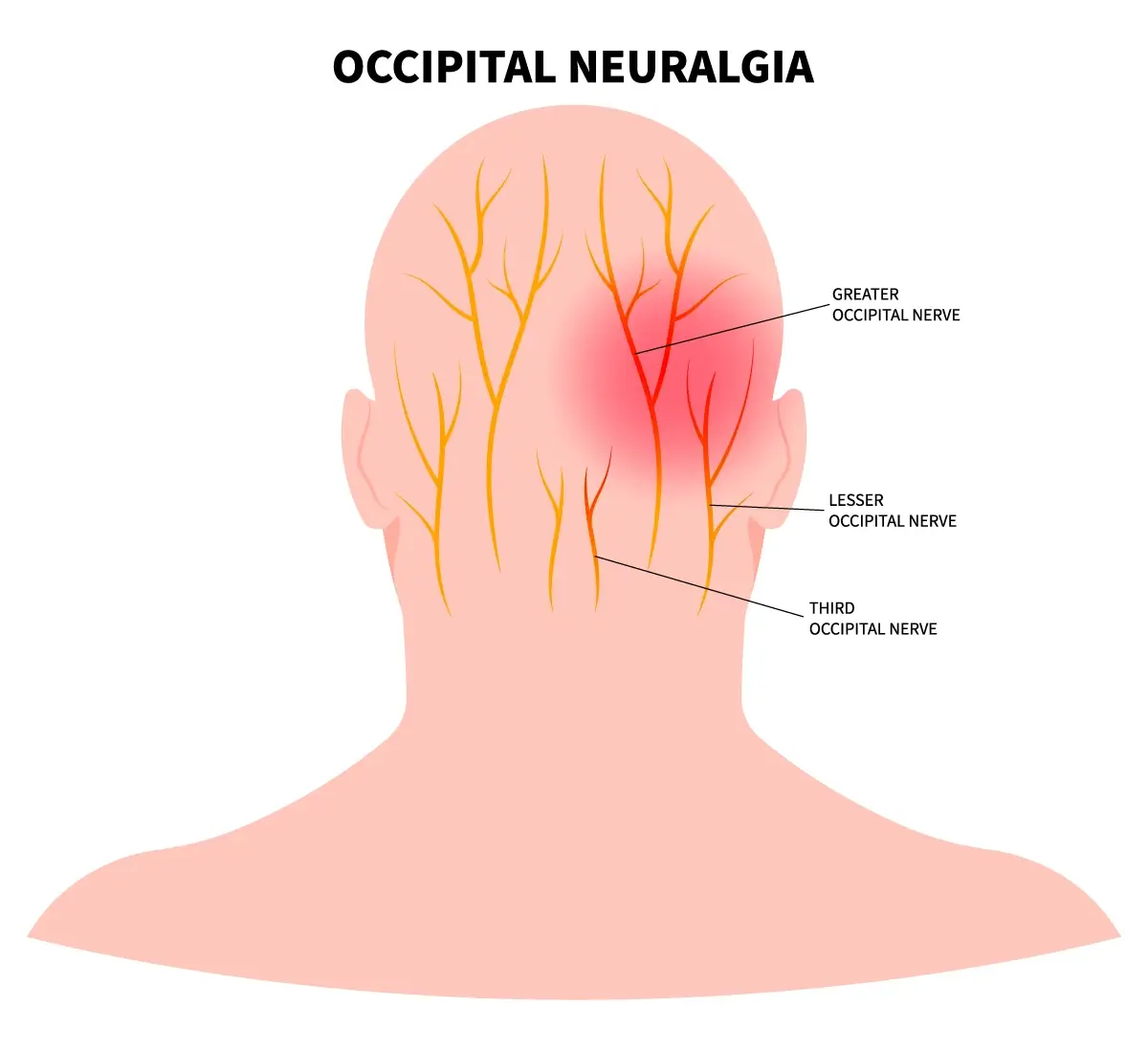
- Occipital Neuralgia Treatment — related cranial nerve presentation
- About Dr. Dan Foss, DC — credentials and SOT training
Frequently Asked Questions
Can chiropractic actually help trigeminal neuralgia, or is that just marketing? For the right patient, yes — and it is not just marketing. The trigeminal nerve passes through bony foramina in the sphenoid, and the spinal trigeminal nucleus extends into the upper cervical cord. If the cranial mechanics or upper cervical alignment are part of what is irritating the nerve, structural correction can produce meaningful relief. A verified 100% pain-relief outcome from this office is published on ChiropracticResults.com. That said, not every TN case is mechanically driven, which is why honest evaluation comes first.
Is this a substitute for my neurologist? No. Trigeminal neuralgia requires medical workup to rule out tumor, multiple sclerosis, and true vascular compression that may warrant surgery. I work alongside your neurologist, not instead of one. My job is to address structural contributors that medication and surgery do not reach.
I am already on carbamazepine. Do I have to stop? No. Do not change your medication without your prescribing doctor. Many of my patients begin care while still on their full medication regimen. If pain reduces over the course of care, medication taper becomes a conversation between you and your neurologist.
Will the adjustments trigger an attack? Almost never. SOT and cranial work are low-force and gentle by design. We do not perform aggressive cervical manipulation on TN patients. The work is precise enough that most patients are surprised at how subtle it feels.
How fast does it work? This is honestly variable. Some patients notice changes within the first few visits. Others respond more gradually over several weeks. Some do not respond, and we figure that out within a reasonable trial period rather than dragging care on indefinitely. The verified outcome on ChiropracticResults.com documents the full clinical course of that specific case.
Do you treat post-dental trigeminal pain, post-herpetic neuralgia, or atypical facial pain? Yes, these are all conditions where structural involvement is common and where SOT and cranial work can be appropriate. Post-dental and post-surgical facial pain is a particularly common pattern in my practice. Evaluation tells us whether structural care is the right tool for your specific case.
Are you bilingual? My mother only speaks Spanish. Yes. I am a fully bilingual Doctor of Chiropractic (Doctor en Quiropráctica). All consultations, exams, and care can be conducted in Spanish or English. Lea esta página en español →.
Ready to Have Your Trigeminal Neuralgia Properly Evaluated?
If you are tired of watching your medication doses climb, of avoiding the wind and the cold and a kiss on the cheek, of being told the next stop is brain surgery — let's have a conversation first. There may be a structural answer no one has looked for yet.
I see patients from across San Antonio — Stone Oak, Castle Hills, Alamo Heights, Helotes, the Medical Center, and the surrounding areas.
Call (210) 685-1994 or book your free consultation.
You can read the verified outcome that supports this approach here: Trigeminal Neuralgia ICD-10 G50.0 — 100% Pain Relief, San Antonio (ChiropracticResults.com).
You do not have to live one more month bracing for the next lightning strike. Let's see what's actually driving it.