GERD and Acid Reflux: CMRT Treatment | San Antonio TX
GERD is linked to T5-T6 subluxation and diaphragm dysfunction. CMRT restores stomach nerve function and prevents reflux without lifelong medication.
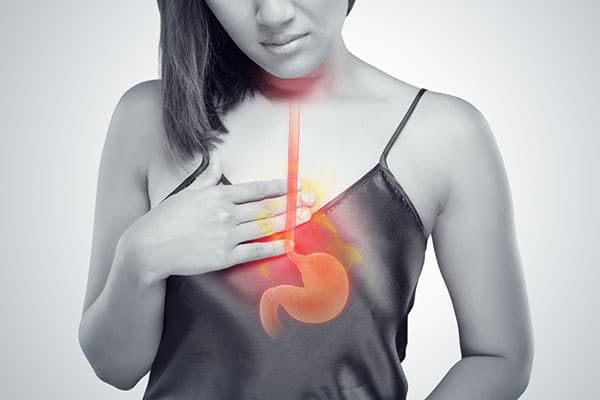
You wake up at 3 a.m. with your throat burning and your stomach in chaos.
You reach for the antacid. It helps for a few hours. Then the burn comes back.
Millions of Americans live with GERD (Gastroesophageal Reflux Disease), and doctors tell them the same thing: "Your stomach makes too much acid. Here is a drug to shut it down."
What they do not tell you: GERD is often not an acid problem. It is a spine and nerve problem.
In 23 years of practice as a CMRT specialist, I have helped hundreds of GERD patients eliminate reflux by restoring proper function to the stomach and diaphragm — both of which are controlled by spinal nerves. Not by taking more medications. But by correcting the subluxation that created the problem in the first place.
Let me show you why your spine might be the real culprit, and how CMRT can finally end the reflux cycle.
The Spine-Stomach Connection: T5-T6
Your stomach is not an independent organ. It is controlled by your autonomic nervous system through specific spinal nerves.
The stomach receives nerve signal from T5-T6 (thoracic vertebrae 5-6). These nerve roots regulate:
- How much acid the stomach produces
- The strength of stomach muscle contractions
- The timing of the gastric valve (the door that lets food in)
- When the stomach signals the brain that it is full
When T5 or T6 becomes subluxated, that nerve signal gets garbled. The stomach then:
- Produces acid at the wrong pH or volume
- Contracts irregularly (food moves too fast or too slow)
- Fails to close the gastric valve properly (allowing acid to back up)
- Loses the ability to signal fullness (you overeat)
Result: acid reflux. But the root cause was never too much acid. It was poor nerve control.
This is why people on proton pump inhibitors (PPIs) often stay on them forever. The drug suppresses acid, but it never fixes the nerve problem. As soon as you stop the PPI, the reflux returns.
CMRT fixes the nerve. The reflux resolves on its own.
The Diaphragm: The Second Part of the Reflux Puzzle
There is another piece: the diaphragm.
Your diaphragm is the large muscle below your lungs that controls breathing. It also has a critical secondary function: it acts as a pressure seal above your stomach. When you breathe deeply, your diaphragm moves down and creates intra-abdominal pressure that keeps stomach acid in the stomach.
But here is the problem: the diaphragm is innervated by the phrenic nerve, which originates in the cervical spine (C3-C5). When vertebrae at these levels are subluxated, the diaphragm becomes weak or dysfunctional.
A dysfunctional diaphragm means:
- No pressure seal above the stomach
- Weak breathing mechanics
- Poor core stability
- Stomach acid easily refluxes into the esophagus
You have probably noticed: people with GERD often have poor posture, shallow breathing, and a weak core. It is not a coincidence. All three are caused by cervical subluxation and diaphragm dysfunction.
CMRT restores proper cervical alignment and diaphragm function, which restores the pressure seal above the stomach. Reflux often resolves within days of correcting this.
Hiatal Hernia and GERD
Many GERD patients have been told they have a "hiatal hernia" — a condition where the upper part of the stomach pushes through the diaphragm.
Here is what most doctors do not tell you: a hiatal hernia is often caused by diaphragm dysfunction. The diaphragm is weak. It cannot hold the stomach in place. So the stomach bulges through.
But you cannot surgically "fix" a weak diaphragm (some doctors try — it rarely helps). You have to restore its nerve function.
This is exactly what CMRT does. By correcting cervical and thoracic subluxations, we restore diaphragm nerve signal. The diaphragm strengthens. It can now hold the stomach in place. The hiatal hernia resolves (or becomes asymptomatic).
For more on hiatal hernia and chiropractic care, read Hiatal Hernia and Chiropractic Treatment, which ranks highly for this condition.
The CMRT Cardia Protocol for GERD
When you come in with GERD, here is what I assess:
- Cervical and thoracic spine exam: Specific testing for subluxation at C3-C5 (diaphragm) and T5-T6 (stomach)
- Postural assessment: Forward head posture, rounded shoulders, and shallow breathing all point to spine dysfunction
- Diaphragm function test: Simple breathing and muscle tests to see if your diaphragm is weak
- History: When reflux happens (after eating, lying down, stress), what you eat, medications, and whether you have a known hiatal hernia
Then I apply the CMRT cardia protocol:
- Cervical adjustments to restore diaphragm nerve signal
- T5-T6 adjustments to restore stomach nerve signal
- Diaphragm release work to restore muscle tone and function
- Postural correction to improve breathing mechanics
- SOT blocks to hold alignment while your body heals
Most patients notice significant reduction in reflux within 3-4 visits. Elimination of reflux takes 8-12 visits over 3 months.
Many patients are able to stop PPI medications once CMRT has addressed the root cause. Always discuss this with your medical doctor before making changes to medications.
CMRT vs. PPIs: The Long-Term Difference
Proton pump inhibitors (PPIs):
- Suppress acid production
- Provide symptom relief within hours
- But they do not address the underlying nerve problem
- Long-term PPI use is associated with B12 deficiency, magnesium deficiency, bone loss, and increased infection risk
- Once you stop, reflux returns
CMRT:
- Restores stomach and diaphragm nerve function
- Takes 3-12 weeks to fully resolve
- Addresses the root cause (spine-nerve dysfunction)
- No side effects
- Results are permanent (with maintenance care)
Both can be used together. Many patients do CMRT while still on PPIs, then gradually reduce the PPI as reflux resolves.
Internal Links: Related CMRT Content
For a deeper understanding of how your T5-T6 subluxation causes reflux, read T5 Subluxation and Stomach Acid Reflux (GERD). For more on the broader spinal-organ connection, see The Spinal-Organ Connection: Foundation of CMRT. Learn more about SOT at /en/services/sot-chiropractic.
Frequently Asked Questions
Will CMRT cure my GERD permanently? In most cases, yes. Once we restore proper nerve function, your stomach and diaphragm work correctly again, and reflux resolves. Occasional flare-ups may happen with poor diet or stress, but they resolve quickly. Maintenance visits every 4-8 weeks keep you stable.
Can I stop my PPI medication once I start CMRT? You can often reduce your PPI significantly, and many patients eventually stop it entirely. But never stop medication without your doctor's approval. Work with both your gastroenterologist and me to safely reduce PPIs as CMRT restores stomach function.
What if I have already had hernia surgery? CMRT still helps. Even after surgery, the underlying nerve dysfunction remains. CMRT corrects the spine, restores nerve signal, and strengthens the diaphragm — which prevents the hernia from recurring.
How quickly will I see results? Most patients notice improvement within 3-4 visits. Significant improvement (being able to eat foods that previously triggered reflux) takes 8-12 visits. Permanent results take consistency.
Is CMRT safe for pregnant women with reflux? Absolutely. Pregnant women are particularly prone to reflux because of pressure from the growing uterus. CMRT is gentle, safe, and very effective for pregnancy-related reflux. I have 23 years of experience adjusting pregnant patients.
Ready to End the Reflux Cycle?
If you have lived with GERD for years, if medications have stopped working or you do not want to take them forever, if you want to address the root cause rather than suppress symptoms — CMRT is worth exploring.
Call (210) 685-1994 or book your free consultation. We will talk through your GERD history, assess your spine and diaphragm, and explain whether CMRT can help you become reflux-free.
We are bilingual (English and Spanish) and located at 2318 NW Military Hwy Suite 103, San Antonio, TX 78231. Hours: Mon, Tue, Thu 7am-4pm.
Your stomach is not broken. It is just not receiving the right signal. Let us fix the signal.