Insomnia and Your Nervous System: A San Antonio Chiropractor's Perspective on Why You Can't Stay Asleep
Can a chiropractor help with insomnia? Dr. Dan Foss, DC explains the nervous-system reasons sleep breaks down — and how SOT cranial work and CMRT address them. San Antonio. (210) 685-1994.
On this page
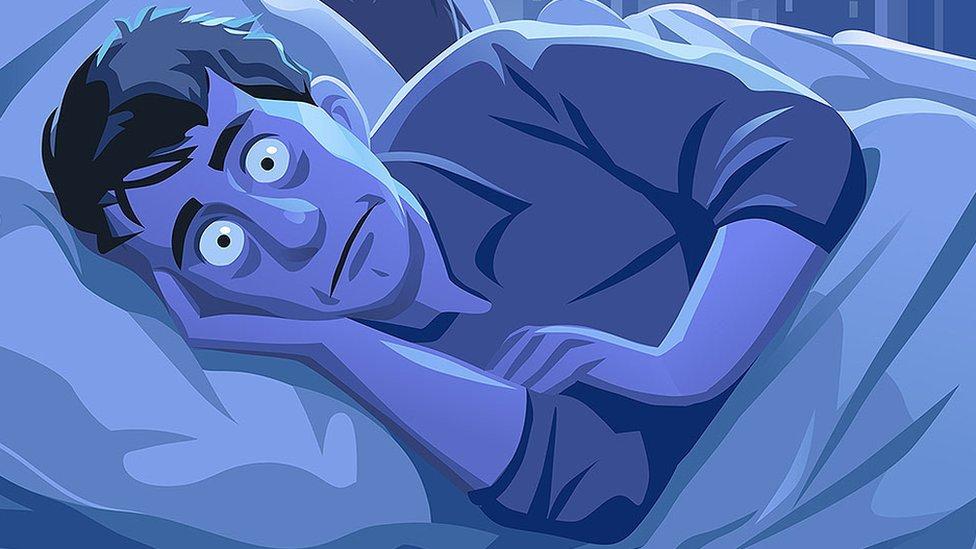
Most people who tell me they "have insomnia" don't have trouble being tired. They're exhausted. What they have trouble with is switching off — lying down with a body that won't stop idling at high speed, or waking at 2:30 in the morning with a mind that's suddenly wide awake for no reason they can name.
By the time someone brings this up in my office in San Antonio, they've usually tried the obvious things: magnesium, melatonin, blackout curtains, no screens after nine. Some of it helped a little. None of it solved it.
Here's the piece almost nobody has looked at: sleep is not a behavior. It's a nervous-system state change. If the nervous system can't make that change cleanly, no amount of sleep hygiene will force it to.
Falling Asleep Is an Autonomic Handoff
Your autonomic nervous system runs in two broad modes. The sympathetic branch is the accelerator — alert, protective, ready. The parasympathetic branch is the brake — digest, repair, rest.
Falling asleep requires a handoff from the first to the second: heart rate drops, breathing slows, digestion comes back online, core temperature falls slightly. That sequence is orchestrated by autonomic pathways traveling through the brainstem and down the spinal column. When those pathways carry interference, the handoff is incomplete — you get a body partially in rest mode, tired enough to lie down but not settled enough to let go. That's "wired and tired," and in my clinical experience it's the most common pattern behind non-restorative sleep. Two structural findings show up over and over.
The Upper Cervical Spine and the Brainstem
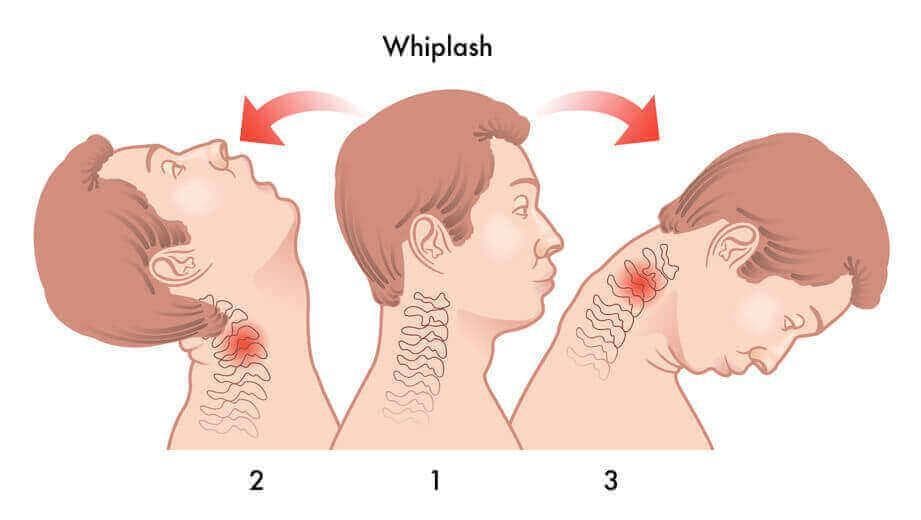
The top of your neck is the narrowest real estate in your spine and the most neurologically loaded. The occiput, C1, and C2 surround the brainstem — where the sleep-wake switching centers live.
Chronic restriction at the occiput–atlas junction can keep the local musculature and surrounding neural tissue in a low-grade state of guarding, and the body reads that guarding as a reason to stay slightly alert. It's also why so many people with sleep complaints have morning headaches, jaw tension, or tightness at the base of the skull — same region. The anatomy is worth reading in where the skull meets the spine.
Dural Tension and the Cranial Mechanism
The dura mater — the tough membrane surrounding the brain and spinal cord — anchors at the cranial base and at the sacrum. It's a continuous, tensioned system, so strain anywhere along it transmits along its whole length. This is where Sacro-Occipital Technique training changes what I can evaluate.
Under sustained tension, the subtle rhythmic motion between the cranial bones is dampened. Patients with a restricted cranial mechanism very often report the same cluster: light sleep, frequent waking, a mind that starts narrating at 3 a.m., and never feeling rested regardless of hours logged. Dural tension is routine in our evaluation and rarely examined anywhere else.
The Stress Axis Piece: Why 2 A.M. Is So Specific
The 2-to-4 a.m. wake-up has a physiological logic. That window is when cortisol is normally at its lowest and should begin a slow climb toward morning. In people whose stress-response system has been running hot for years, that curve can shift — cortisol arrives early and sharply instead of gradually, and you wake up alert at the wrong end of the night.
The adrenal glands receive their autonomic nerve supply from the lower thoracic and upper lumbar spine. That's the region CMRT — Chiropractic Manipulative Reflex Technique — is built to address, pairing the spinal correction with the corresponding visceral reflex points. I've written about the pattern in adrenal fatigue and chronic stress.
To be clear: chiropractic care does not replace medical evaluation of a hormone or sleep disorder, and I don't claim it corrects cortisol curves. What I can say is that addressing the spinal segments and reflexes supplying the stress axis is a legitimate input — and one almost never checked by the time someone reaches me.
Pain, Breathing, and the Things That Get Missed
Not every sleep problem is subtle. A few mechanical causes are worth ruling out directly:
- Positional neck or shoulder pain. If you wake every time you roll onto one side, a joint may not tolerate that position. Neck pain that only announces itself at night is common.
- Airway and jaw position. Forward head posture and a narrow upper jaw both reduce airway space. If you snore, wake with a dry mouth, or grind your teeth, the maxilla, TMJ, and sleep apnea is directly relevant — and suspected sleep apnea needs a sleep study, not an adjustment.
- Restless legs. An urge to move the legs that peaks in the evening and eases when you get up and walk is its own condition — and it's frequently mistaken for a nerve problem, or vice versa. See restless legs: RLS or something that looks like it.
- Anxiety that shows up only in the dark. Daytime distraction masks a sympathetic-dominant baseline; lying still removes the mask. This overlaps with anxiety and depression.
What Evaluation Actually Looks Like
A sleep-focused visit is not a five-minute adjustment. The Pura Vida Protocol means we work through your sleep history in detail (onset versus maintenance, what wakes you, what you've tried, what you're taking); an SOT category assessment to determine whether the primary pattern is pelvic (Category I), dural/cranial (Category II), or discal (Category III), because the correction differs entirely in each case; upper cervical and cranial evaluation; CMRT reflex screening of the adrenal, liver, and diaphragm reflexes that commonly hold a sympathetic pattern in place; and an airway and postural screen, with referral for a sleep study when findings point that way.
Care is low-force. SOT uses pelvic blocks and gentle sustained contacts rather than forceful thrusting, which matters when your nervous system is already over-recruited — you can't force a system into parasympathetic. Where inflammation is part of the picture, Class IV laser therapy may be used alongside the adjusting.
Patients who respond tend to notice it in an order: falling asleep gets easier first, night waking shortens next, and waking rested comes last. I don't promise outcomes — if we're not seeing movement, I'll tell you and help you look elsewhere.
Frequently Asked Questions
Can a chiropractor help with insomnia? A chiropractor can address the structural and neurological factors that interfere with sleep — upper cervical restriction, dural and cranial tension, pain that's position-dependent, and spinal segments supplying the stress axis. That's different from treating insomnia as a diagnosis. If those factors are contributing to your sleep problem, correcting them may help. If your insomnia is driven primarily by a primary sleep disorder, a medication side effect, or an untreated mood disorder, you need the appropriate provider for that, and we'll say so.
Should I get a sleep study? If you snore loudly, gasp or stop breathing in your sleep, wake with headaches or a dry mouth, or have significant daytime sleepiness, yes — ask your physician about a sleep study. Sleep apnea is a medical diagnosis and should not be managed with chiropractic alone. We screen for the structural contributors and refer out.
Do I have to stop my sleep medication to start care? No. Do not change or stop any prescribed medication based on chiropractic care. Bring your list to your first visit. Any decision about tapering belongs to your prescribing physician.
If You Haven't Slept Well in Years
The most common thing I hear after a few weeks of care isn't "I sleep eight hours now." It's some version of I didn't realize how long I'd been running on that. If you've worked through the sleep-hygiene list and you're still lying awake, the nervous-system side of this may never have been examined.
We see patients from across San Antonio — Castle Hills, Shavano Park, Stone Oak, Alamo Heights, Olmos Park, and Helotes — in both English and Spanish. Read more on our insomnia and sleep apnea pages, or about the technique under SOT chiropractic and cranial chiropractic.
Call (210) 685-1994 or book a free consultation. We're at 2318 NW Military Hwy Suite 103, San Antonio, TX 78231.