Optimal Fetal Positioning: How Spinning Babies and SOT Work Together | San Antonio TX
Learn how Spinning Babies movements and SOT chiropractic complement each other to optimize fetal positioning and reduce labor complications. Dr. Dan Foss explains the science and practice.
You are 30 weeks pregnant, and your baby is breech. Or posterior. Or transverse. Maybe you have heard of something called "Spinning Babies" and you are wondering if it will help. Maybe you have researched the Webster Technique and you are not sure how it differs from the movements you can do at home. Here is what I tell every mom who comes to Pura Vida Chiropractic with this concern: the most powerful approach combines both. Neither alone is as effective as the two working together.
In 23 years of practice, I have watched hundreds of mothers use Spinning Babies movements alongside chiropractic SOT care and achieve optimal fetal positioning. I have also seen mothers who tried one without the other get stuck, frustrated, and ultimately face the birth experience they were hoping to avoid. Let me explain why both matter, how they work together, and when to start.
Why Baby's Position at Birth Matters
Before we talk about how to optimize position, let us talk about why it matters at all.
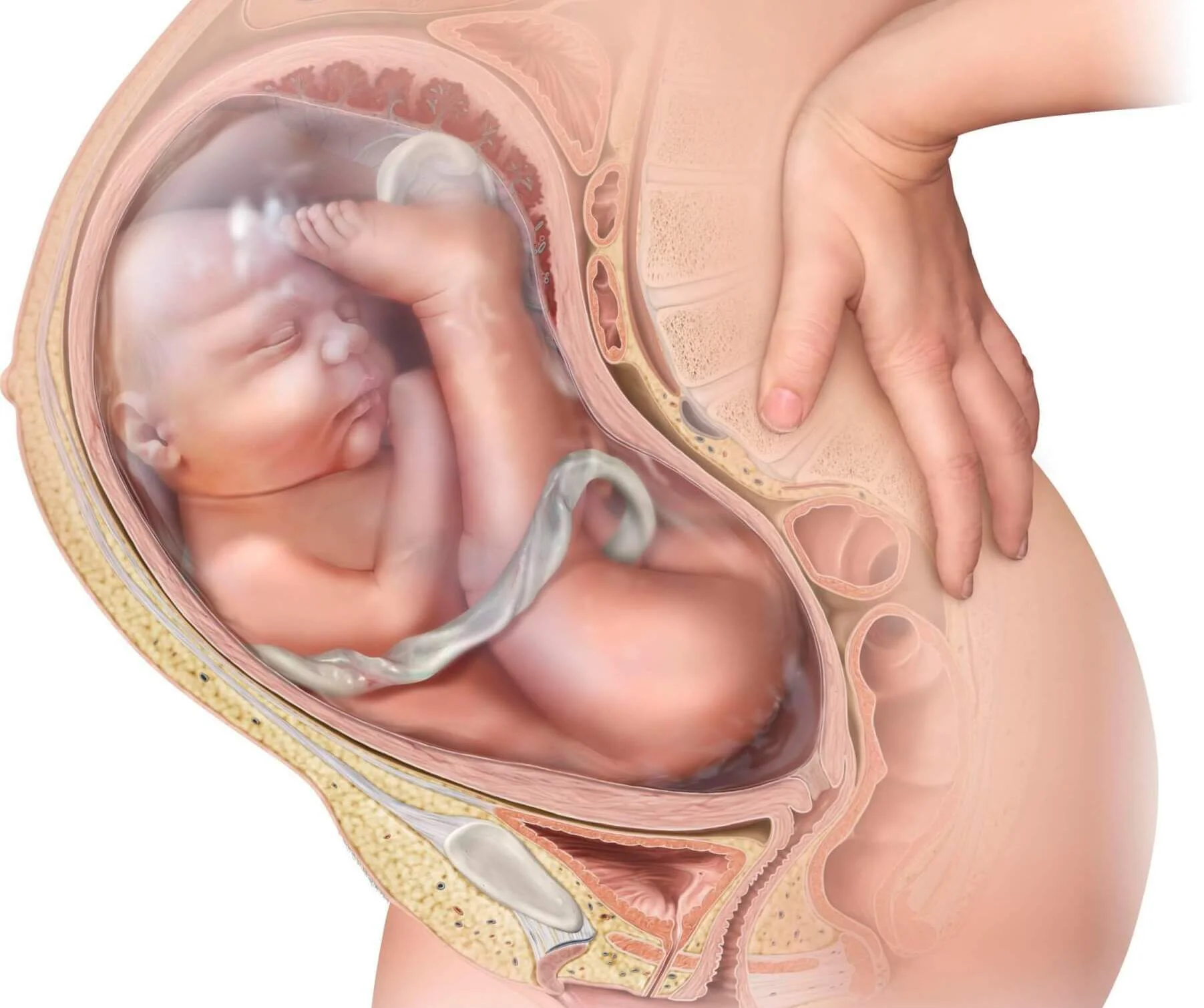
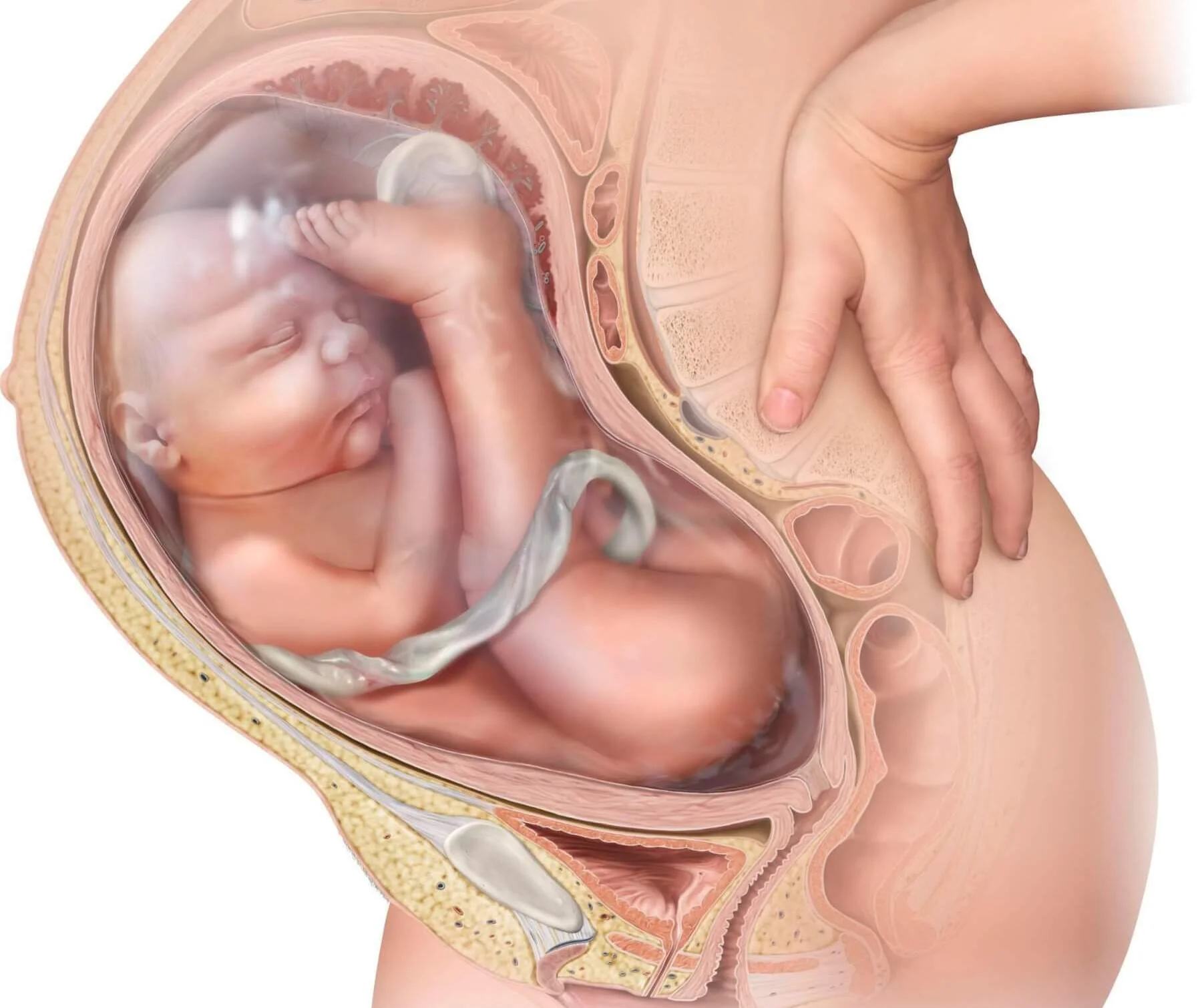
Your baby will spend most of the pregnancy moving freely through the amniotic fluid. But as you approach labor, position becomes critical. The optimal position for birth is head-down (vertex), with the baby's face toward your spine (occiput anterior). In this position, the smallest diameter of the baby's head enters your pelvis first, labor typically progresses smoothly, and vaginal delivery is most likely.
But babies do not always settle into this ideal position. Some turn breech — head up, feet down. Others settle into a posterior position — face toward your belly instead of your spine. Still others are transverse — lying sideways across your uterus.
What happens then?
- Breech presentation increases the likelihood of c-section, increases cord prolapse risk, and makes vaginal birth substantially harder if attempted.
- Posterior position (also called "sunny side up") typically makes labor longer and more painful because the baby is working against the natural curve of your pelvis. Back labor is common.
- Transverse presentation makes vaginal birth impossible; cesarean delivery becomes necessary.
These are not failures. These are just babies who need help finding their optimal position. And that is exactly what Spinning Babies and SOT chiropractic are designed to provide.
What Is Spinning Babies?
Spinning Babies is a system of movements, positions, and daily habits created by Gail Tully, a midwifery educator who spent decades studying fetal positioning. It is not a treatment. It is a framework for optimizing your body's environment so that your baby can self-correct into the best position.
The philosophy is simple: if you remove constraint from the mother's body and optimize the shape of her uterus and pelvis, the baby will move into the most efficient position on his own.
Spinning Babies includes three categories:
Daily Essentials — movements and positions you do every day to keep your uterus well-shaped and your pelvis open:
- Forward-leaning positions (hands and knees, birth ball, supported forward folds)
- Open-knee chest positions
- Side-lying positions
- Avoiding positions that crowd the uterus (deep reclines, slouching, lengthy bed rest)
Spinning Sequences — targeted movement patterns designed to help a baby move from non-optimal positions:
- Lunges (one side at a time, holding each for 10 breaths)
- Hands-and-knees rocking
- Side-lying leg lifts
- Inversion techniques (with modifications for safety)
Specific Techniques — specialized movements for particular presentations:
- For breech: sidelying release, forward-leaning activities, abdominal massage
- For posterior: hip circles, lunges, side-lying leg lifts
- For transverse: hand-and-knees positions, side-lying positions
Spinning Babies is powerful, accessible, and can absolutely help your baby turn. Thousands of mothers have used these techniques to avoid breech birth.
What Chiropractic SOT and Webster Do Differently
Now, here is the critical point that many mothers do not understand: even if you do every Spinning Babies move perfectly, if your pelvis is structurally restricted or misaligned, your baby cannot achieve optimal positioning.
Think of it this way: imagine trying to reposition furniture in a room with a narrow, twisted doorway. No matter how perfectly you execute the moves, the furniture cannot fit through the door. The door itself is the problem.
Your pelvis is like that doorway. It is a three-dimensional space with multiple joints — the sacroiliac joints, pubic symphysis, sacrum, and innominate bones. When any of these joints are misaligned or restricted, they create mechanical constraint. The space inside your pelvis becomes smaller, twisted, or asymmetrical. Your uterine ligaments become tight and unbalanced.
This is where Sacro-Occipital Technique (SOT) and the Webster Technique step in. These are not new ideas. They have been used by chiropractors for decades specifically to optimize pelvic mechanics during pregnancy.
What SOT does: Using precisely placed wedge blocks and gentle rocking, SOT restores proper alignment and motion to the sacroiliac joints and pelvis. It corrects the three-dimensional asymmetries that Spinning Babies alone cannot address. The blocks are comfortable to lie on, and the corrections are subtle but profound.
What Webster does: The Webster Technique is a specific analysis and adjustment protocol that identifies and corrects pelvic muscle and ligament tension — particularly the round ligament, sacrotuberous ligament, and pelvic floor muscles. By releasing this tension, Webster removes the structural constraint that has been keeping your baby in a non-optimal position.
The critical misunderstanding: Many mothers think Webster is a "baby-turning technique" — that the chiropractor is doing something to the baby. This is not accurate. Webster does not turn the baby. It removes constraint from the mother's pelvis so that the baby can turn himself.
Your baby already wants to be in the optimal position. Breech, posterior, and transverse presentations often happen not because the baby "chose" them, but because the mother's pelvic mechanics made that position the most comfortable. Fix the mother's pelvis, and the baby typically self-corrects within days to weeks.
Why Combining Both Is More Effective Than Either Alone
Here is what I see in practice, consistently:
Mothers who use only Spinning Babies: Many succeed, especially if they start early (by 28 weeks). But some hit a wall. They do the movements religiously. The baby does not turn. Or the baby turns partway and gets stuck. Why? Because the underlying pelvic mechanics that made the non-optimal position comfortable are still there. Without addressing the pelvis, the baby often resets back to the original position after turning.
Mothers who use only chiropractic care: Even a perfectly aligned pelvis does not guarantee positioning success if the mother spends all day in constraint-creating positions — slouching, deep reclines, tight sitting. The adjustment helps, but without the positional work, progress is slower.
Mothers who combine both: These are the success stories I see most reliably. The chiropractic work removes the structural constraint. The Spinning Babies movements reinforce the open, well-shaped uterine environment. Together, they address both the "hardware" (pelvic mechanics) and the "software" (uterine position and shape). The baby has every possible advantage to achieve and maintain optimal positioning.
Here is the timeline I typically see with combined care:
- Week 1 of combined care: Initial adjustments and Spinning Babies instruction. Baby sometimes shifts slightly.
- Weeks 2–4: Consistent adjustments plus daily Spinning Babies work. Baby often makes significant positional changes.
- Weeks 4–8: Maintenance adjustments every 1–2 weeks plus continued Spinning Babies. Most babies have fully transitioned to optimal position by this point.
This is not guaranteed in every case — some babies are determined, and some presentations have other factors at play. But combined care statistically gives you the best chance of success.
When to Start: Earlier Is Better
Ideally, you start thinking about fetal positioning by 28 weeks of pregnancy. At this point, your baby still has relative freedom to move. If you begin Spinning Babies and chiropractic care at 28–32 weeks, you have maximum runway. Most repositioning happens within 4–8 weeks of combined care.
But it is never too late to start. Even at 36 weeks, if your baby is breech or posterior, combined care can help. It is easier the earlier you begin, but the benefits exist even in the final weeks of pregnancy.
Start earlier still if:
- You have a history of posterior or breech presentations
- You have pelvic pain or asymmetry (one-sided pain is a sign of pelvic misalignment)
- You want to maximize your chances of vaginal birth
- You are planning a VBAC (vaginal birth after cesarean) — optimal positioning is especially important
Start immediately if:
- Your ultrasound shows breech presentation at any point after 28 weeks
- You are considering external cephalic version (ECV) and want to optimize first
- Your baby is transverse after 30 weeks
What Happens at a Pura Vida Appointment for Positioning
If you come to us specifically for fetal positioning work, here is what to expect:
Initial appointment (30–45 minutes):
- Detailed pregnancy history and any positioning concerns
- Assessment of your posture, pelvic alignment, and structural asymmetries
- Explanation of your baby's current position (based on your description and palpation)
- Initial SOT adjustments using wedge blocks and gentle mobilization
- Detailed Spinning Babies instruction tailored to your situation and your baby's presentation
- Discussion of daily habits and positions to maintain
Follow-up appointments (20–30 minutes):
- Check on your baby's position based on what you are feeling and any imaging you have
- Additional SOT adjustments as needed
- Reinforcement of Spinning Babies techniques
- Modifications to your routine based on progress
- Coordination with your midwife or OB as needed
We will also coordinate with your midwife, OB, or birth doula. Many midwives and doulas already understand the value of chiropractic positioning work, and they welcome the partnership. If you are planning external cephalic version (ECV) — a medical procedure to manually turn the baby — we can provide pre-ECV chiropractic care to optimize your chances of success.
A Note on Webster, Safety, and Evidence
Webster was developed in the 1970s by chiropractor Larry Webster after his own daughter was born breech. Over the decades, it has been refined and studied. Research on Webster for breech babies shows success rates of 60–80% depending on how far into pregnancy you are and when you start care.
It is safe. Webster uses no high-velocity thrusts, no abdominal pressure, and no positions that would compromise your baby or uterus. It is gentle enough for first trimester and appropriate all the way through 41 weeks.
That said, Webster is not magic. It does not work in 100% of cases. Some babies are simply determined to be breech, posterior, or transverse for reasons we do not fully understand. Some presentations are driven by physical constraints (short cord, extra amniotic fluid, maternal anatomy) that positioning work cannot overcome.
What Webster and Spinning Babies together do offer is a substantial chance of success — higher than either alone — with no medication, no surgery, and no risk.
Coordinating with Your Care Team
Here is my strong recommendation: involve your entire birth team from the start.
Tell your OB or midwife that you are interested in positioning work. Share the research on Spinning Babies and Webster. Ask if they have seen success with these approaches in their own practice. Most OBs and midwives have. Many will actively encourage you to pursue this route.
If you are seeing a doula, tell them as well. Doulas often have specific knowledge about positioning and can reinforce your Spinning Babies practice between chiropractic visits.
We work alongside, not instead of, your medical team. If your baby does not reposition despite 8 weeks of combined care, we will refer you back to your OB with full documentation. If external cephalic version (ECV) is on the table, we can provide supporting care. If cesarean delivery becomes your birth plan, we support that fully and offer postpartum care to help you recover.
Ready to Optimize Your Baby's Position?
If you are pregnant and concerned about your baby's position — whether breech, posterior, transverse, or you simply want to maximize your chances of ideal positioning — the time to start is now.
Call (210) 685-1994 or book your free consultation online. We will assess your situation, explain what is possible with combined Spinning Babies and SOT care, and help you create a plan. We serve moms from Stone Oak, Castle Hills, Alamo Heights, Helotes, and across San Antonio.
We are bilingual — English and Spanish — and we have been helping mothers optimize fetal positioning for 23 years. Your baby wants to be in the best position. Your pelvis has the capacity to support that. Let us help you both get there.