Piriformis Syndrome: Why Stretching It Keeps Not Working, and What Your Sacrum Has to Do With It
Deep buttock pain that isn't a disc. Dr. Dan Foss, DC explains how to tell piriformis syndrome from true sciatica, and why SOT Category I pelvic work addresses the cause. San Antonio. (210) 685-1994.
On this page
If you've been told you have sciatica, been handed a piriformis stretch, and found that the stretch helps for about twenty minutes before the pain comes back exactly as it was — this post is for you.
That pattern isn't a sign you're stretching wrong. It's a sign that the muscle isn't the problem. It's the place where the problem is showing up.
What Piriformis Syndrome Actually Is
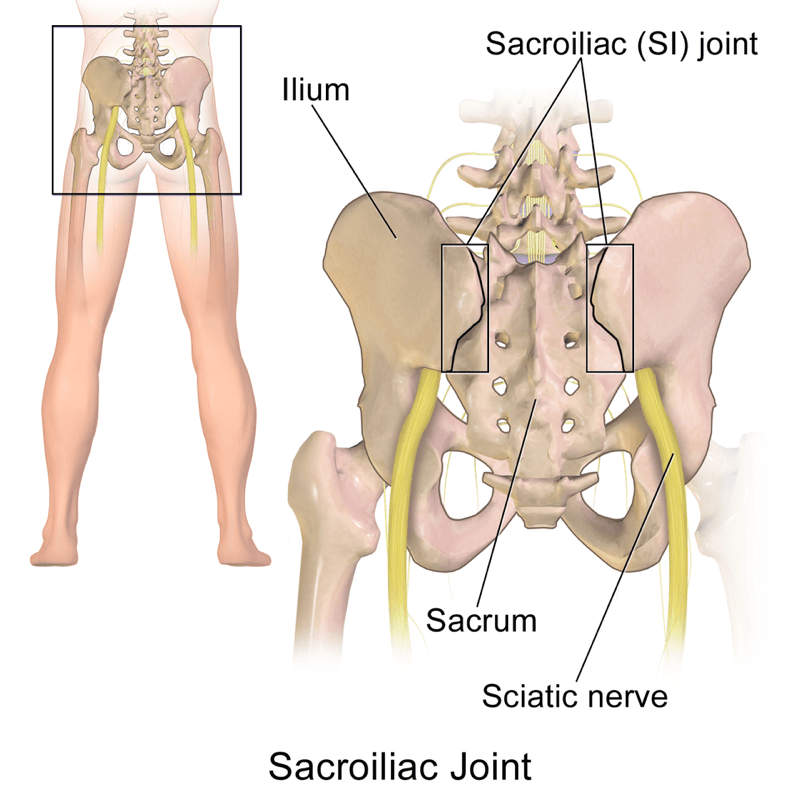
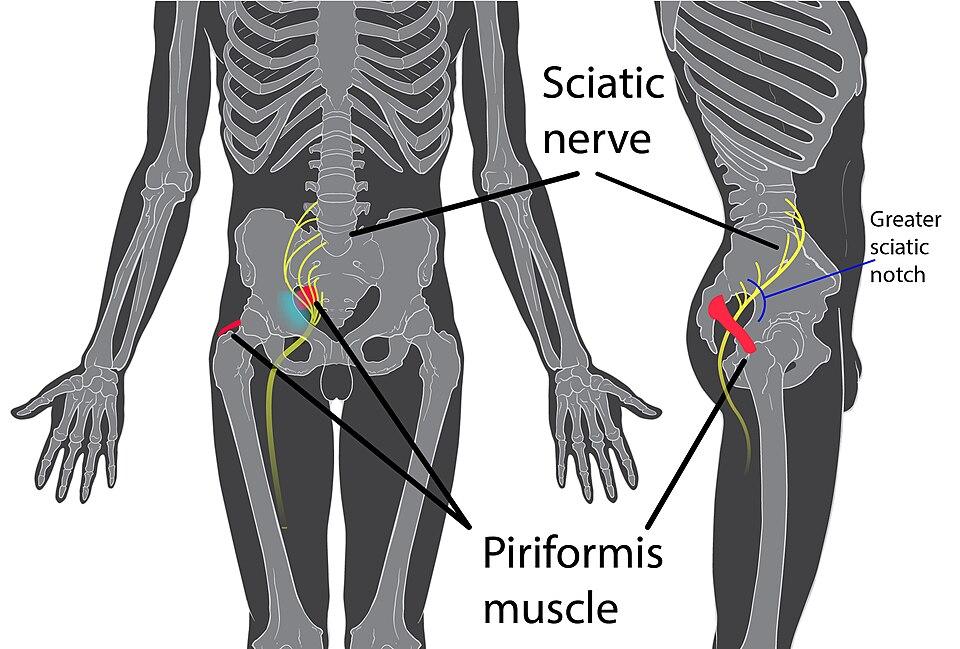
The piriformis is a flat, triangular muscle deep in your buttock. It runs from the front surface of the sacrum — the triangular bone at the base of your spine — out to the top of your thigh bone. Its job is to rotate the hip outward and help stabilize the pelvis when you walk.
The sciatic nerve passes directly beneath it. In a minority of people, the nerve passes straight through the muscle instead.
Piriformis syndrome is what happens when that muscle compresses or irritates the sciatic nerve. You get pain deep in the buttock, often with pain, numbness, or tingling running down the back of the thigh. It can look exactly like sciatica from a disc — which is precisely why it gets misdiagnosed in both directions.
How to Tell It From a Disc Problem
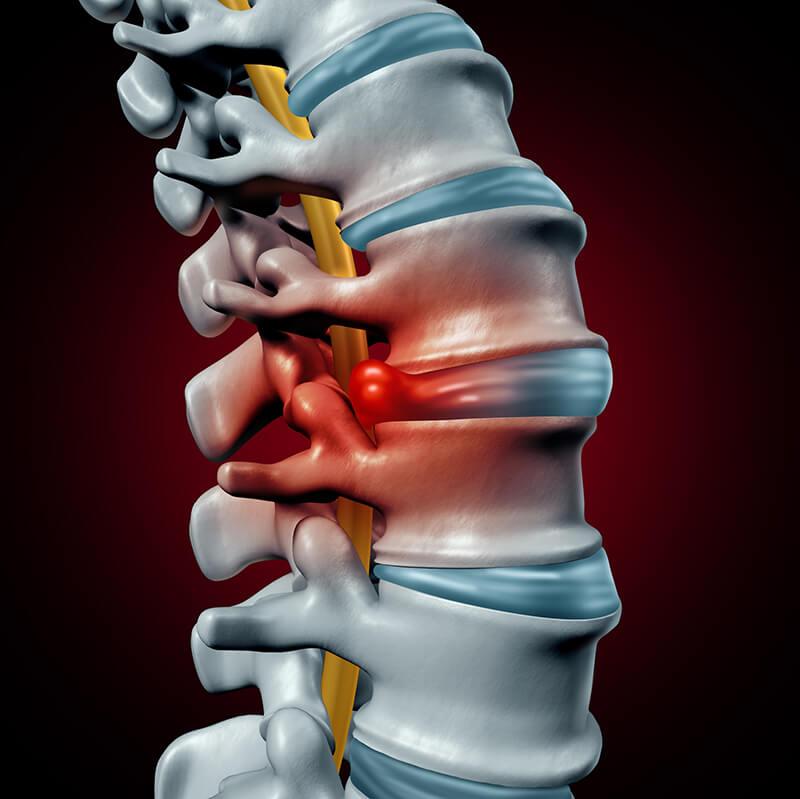
This distinction matters enormously, because the treatment diverges. Some patterns that point toward piriformis rather than the spine:
- Sitting is the worst thing. A hard chair, a long drive on 1604 or I-10, a movie — anything that compresses the buttock reproduces it. People with disc-driven pain often hurt more with bending, coughing, or straining.
- The tender spot is deep in the buttock, roughly midway between the sit bone and the top of the hip, not in the low back. Many patients with piriformis syndrome have no back pain at all.
- It's hard to find but easy to recognize. Pressing the right spot produces a distinctive deep, sickening ache that often refers down the leg.
- No true neurological deficit. A herniated disc pressing a nerve root can produce measurable weakness, reflex loss, and pain in a specific dermatomal stripe. Piriformis compression more often produces diffuse aching and tingling without clean neurological findings.
None of these is conclusive on its own, which is the point of an exam. And the two coexist more often than either gets credit for — a genuinely irritated nerve root makes the surrounding muscles guard, and a guarding piriformis then adds its own compression on top.
Red flags that are not chiropractic problems: numbness in the groin or saddle region, loss of bladder or bowel control, or rapidly progressive weakness such as a foot that starts slapping the ground. Those need emergency medical evaluation the same day, not an adjustment.
Why the Stretch Stops Working
Here's the part that explains the frustration, and it's pure anatomy.
The piriformis originates on the sacrum. That means the resting length and tension of the muscle are dictated by where the sacrum is sitting. If the sacrum is rotated or restricted — if the sacroiliac joints aren't moving symmetrically — then the piriformis on one side is being held at a mechanical disadvantage every second of the day.
You can stretch that muscle. You can foam roll it, dig a lacrosse ball into it, get it needled. All of that can feel good, and none of it changes the position of the bone the muscle is anchored to. So the tension re-establishes itself within hours, because the muscle is doing exactly what its mechanical situation requires.
This is also why piriformis pain so often travels with the sacroiliac joint. If you recognize the pattern of a back that keeps going out in the same place, that's the same conversation — I wrote about it in why your back keeps going out in the same spot and about the joint itself in the sacroiliac joint most doctors miss.
The SOT Category I Fit
Of everything in my toolkit, this is the cleanest match between a technique and a condition.
Sacro-Occipital Technique sorts patients into categories, and Category I is the pelvic and sacroiliac category — the dural and ligamentous relationship between the sacrum and the rest of the system. It's treated with padded wedge blocks placed under the pelvis in a specific configuration, then letting the patient's own respiration and body weight do the correction over several minutes.
There's no thrust, no twisting of an irritated hip, no force into a nerve that's already annoyed. The sacrum is restored toward neutral, and the piriformis is released from the mechanical disadvantage it was working against. That's the difference between treating the muscle and treating why the muscle is tight. More in what SOT blocks are and how they work and SOT Category I, II and III.
What Care Looks Like
- Establish which problem you have — piriformis, nerve root, SI joint, hip joint, or some combination. This is an exam question, not a guess.
- Correct the pelvis and sacrum using SOT blocking and low-force adjusting, rather than chasing the muscle.
- Address the soft tissue second, once the mechanics support the release. Class IV laser therapy for nerve irritation and inflammation, and shockwave therapy where the muscle and its attachments have become chronically fibrotic.
- Fix the daily loading. Wallet out of the back pocket. Seat height and lumbar support in the vehicle you spend an hour a day in. Breaks from sitting that are frequent rather than long.
- Glute strength, deliberately. A weak gluteus medius forces the piriformis into a stabilizing role it was never meant to hold. That's often the reason this recurs.
Most patients with straightforward piriformis involvement notice a change reasonably quickly once the pelvis is addressed. Long-standing cases with nerve sensitization take longer, and if we aren't making progress I'll say so and get imaging or a referral rather than repeat something that isn't working.
Frequently Asked Questions
Is piriformis syndrome the same as sciatica? No. Sciatica describes a symptom — pain along the sciatic nerve — not a cause. That symptom can come from a disc pressing a nerve root in the spine, from the piriformis compressing the nerve in the buttock, or from other sources. Piriformis syndrome is one specific cause of sciatica, and the treatment is meaningfully different from disc-driven cases.
Why does sitting make it so much worse? Sitting compresses the buttock and puts the piriformis and the sciatic nerve under direct pressure, and it also puts the hip in the flexed position that shortens the muscle. Long commutes are one of the most common aggravating factors I see in San Antonio. If you drive a lot, a wedge cushion and a genuinely upright seat position often help more than any stretch.
Should I keep stretching it? Gentle stretching within comfort is fine and can help you feel better in the moment. What I'd stop doing is aggressive stretching that reproduces the shooting pain down the leg — you're loading an irritated nerve. And I wouldn't expect stretching alone to resolve something whose cause is sitting one level up at the sacrum.
Do I need an MRI? Usually not initially. Piriformis syndrome is diagnosed clinically, and MRI of the low back frequently shows disc findings that are incidental rather than the source of your pain. Imaging matters when there's genuine neurological deficit, a red flag, or a case that isn't responding as expected.
If Your Buttock Pain Has Outlasted Every Stretch You've Tried
This condition frustrates people because the standard advice targets the symptom. Once you understand that the muscle is anchored to a bone that may be sitting wrong, the whole thing starts to make sense — and becomes treatable.
We see patients across San Antonio — Castle Hills, Shavano Park, Stone Oak, Alamo Heights, Olmos Park, and Helotes — in English and Spanish. More on our piriformis syndrome and SI joint dysfunction pages.
Call (210) 685-1994 or book a free consultation. We're at 2318 NW Military Hwy Suite 103, San Antonio, TX 78231.