Epsom Salt Foot Bath: The Pura Vida Chiropractor's Complete Recipe + 6 Conditions It Actually Helps | San Antonio
A San Antonio chiropractor's comprehensive guide to the epsom salt foot bath: science-backed recipe, six conditions it genuinely eases (plantar fasciitis, sciatica, pregnancy swelling, post-MVA recovery), how to dose magnesium safely, and the SOT protocols that pair with it for compound benefit.
On this page
Most articles online about epsom salt foot baths say the same three things: "soak for 20 minutes," "it relaxes you," "it pulls toxins out." That is not wrong, but it is shallow — and it does not tell you the one thing you actually came here for, which is whether this will help your condition, what dose to use, and what to pair it with so the relief sticks.
I am Dr. Dan Foss, DC, of Pura Vida Chiropractic in San Antonio. I am Advanced SOT-certified — the only Advanced SOT certification in the San Antonio area — and Webster-certified for prenatal care, with 23+ years in practice treating exactly the conditions that bring people to an epsom salt foot bath: plantar fasciitis, sciatica, pregnancy swelling, post-car-accident inflammation, neuropathy, chronic low-back pain.
This is the version of the epsom salt foot bath article I wish my patients had been handed long before they ever needed me. The recipe is below. The science is real but limited. The six clinical conditions it genuinely helps are below. And the protocol we use at Pura Vida that turns a 20-minute foot soak into something that actually changes how your spine, pelvis, and feet move is at the end.
What Epsom Salt Actually Is (and Why "Salt" Is Misleading)
Epsom salt is magnesium sulfate (MgSO₄·7H₂O) — a naturally occurring mineral, not sodium chloride table salt. It was named after Epsom, England, where it was discovered seeping out of a bitter spring in the early 1600s. People bathing in that spring noticed their skin healed faster, their soreness eased, their constipation resolved. That observation became one of the longest-running folk remedies in the Western pharmacopeia.
Magnesium is the fourth most abundant mineral in the human body. You need it for over 300 enzymatic reactions, including:
- Muscle relaxation and contraction. Calcium contracts a muscle. Magnesium relaxes it. Low magnesium = chronically tight muscles.
- Nerve signaling. Magnesium is the gatekeeper at the NMDA receptor — a central player in pain perception and inflammation.
- Bone formation. Roughly 60% of your body's magnesium is stored in bone.
- ATP production. Every cell that uses energy uses magnesium to do it.
- Blood pressure regulation, blood sugar control, heart rhythm.
Modern American diets are widely magnesium-deficient. Soil depletion, processed food, and high coffee/alcohol intake all reduce magnesium status. Estimates put 48% of Americans below the recommended daily intake. The deficiency rarely shows up as a clean lab finding — it shows up as muscle cramps, restless legs, anxiety, constipation, migraines, and chronic tension.
That is the context for the foot bath: you are soaking the most absorptive skin on your body in a warm magnesium solution. Whether magnesium absorbs transdermally in clinically meaningful amounts is genuinely debated in the literature (more on that below) — but the warm-water effect, the parasympathetic nervous system activation, and the foot reflex zone stimulation are real regardless of how much magnesium technically crosses into your bloodstream.
The Recipe (the Pura Vida Version)
This is the foot soak I prescribe to patients in clinic for the conditions listed below. It is more concentrated than the typical online recipe because clinical effect requires clinical dosing.
What you need:
- A foot basin or large bowl deep enough to cover your ankles (at least 4 inches of water depth)
- 2 cups of pure epsom salt (USP-grade if you can find it — sold at HEB, Walgreens, CVS, Amazon for $4–$10/2 lbs)
- 1/2 cup baking soda (sodium bicarbonate — helps the magnesium dissociate and adds anti-inflammatory effect)
- Hot water — as hot as you can comfortably tolerate, typically 100–105°F
- Optional: 5–10 drops of pure essential oil. Lavender for relaxation, peppermint for nerve pain or hot/burning feet, frankincense for inflammation, eucalyptus for circulation. Skip if you are pregnant in the first trimester or have sensitive skin.
- Optional: 1/4 cup organic apple cider vinegar — adds an anti-fungal effect if you are dealing with athlete's foot or toenail fungus alongside the soak
Method:
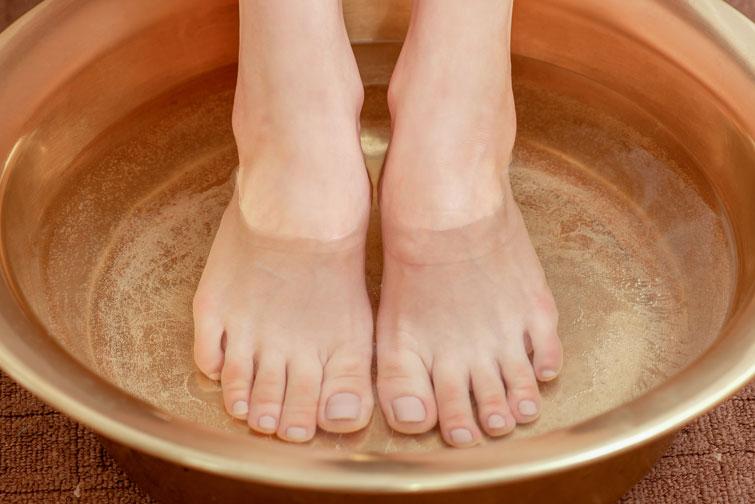
- Fill your basin with hot water — enough to cover your ankles when your feet are flat.
- Stir in the epsom salt until fully dissolved. The water should feel slightly slick.
- Add the baking soda. Stir until dissolved.
- Add essential oils if using. Stir.
- Test the water with your hand. If it is too hot, wait. Never put feet into water that you have not first tested with your hand — diabetic neuropathy and post-MVA neuropathy can both blunt heat perception and you can scald yourself.
- Soak for 20 minutes minimum, 30 minutes ideal. Refresh with hot water at the 15-minute mark if it cools down.
- After the soak, dry your feet thoroughly between the toes (this prevents fungus, especially in our San Antonio humidity).
- Apply a magnesium oil or magnesium lotion to the soles and calves immediately after drying — your pores are open and absorption is maximized in the first 5 minutes post-soak. (We sell professional-grade magnesium oil at the clinic, but Ancient Minerals brand from Amazon is fine.)
- Elevate your feet for 10 minutes afterward if you can — this drains the lymphatic and venous return your soak just stimulated.
Frequency:
- Acute condition (sciatica flare, post-MVA, sprained ankle, plantar fasciitis flare): Daily for 7–14 days.
- Chronic condition (chronic low-back pain, neuropathy, restless legs): 3–4 times per week.
- Maintenance / wellness: 1–2 times per week, ideally at night before bed.
- Pregnancy swelling (third trimester): Every other day. Skip if you have preeclampsia or gestational hypertension — see the warnings below.
The Science: What the Research Actually Shows
I am not going to oversell this. The peer-reviewed evidence for transdermal magnesium absorption is mixed. A 2017 systematic review in Nutrients concluded that the evidence for meaningful transdermal magnesium absorption from foot soaks is weak. A small but interesting 2017 pilot study (Engen et al., Magnesium Research) showed that magnesium chloride applied as a spray increased serum magnesium in some subjects but the effect was inconsistent.
That said, the clinical outcomes patients report — and the outcomes I see in clinic after I add this to a treatment plan — go well beyond what magnesium absorption alone would explain. The likely mechanisms:
- Vasodilation from warm water. Heat opens blood vessels in the feet and lower legs, increasing circulation by 25–40%. For pregnancy swelling, post-MVA edema, plantar fasciitis, and Raynaud's phenomenon, this alone is a clinical effect.
- Parasympathetic activation. A 20-minute warm-water foot soak drops cortisol and shifts the autonomic nervous system from sympathetic (fight-or-flight) to parasympathetic (rest-digest-heal). This is measurable on heart rate variability monitoring.
- Reflex zone stimulation. The feet contain neurological reflex zones that connect through the spinal cord back to organ systems — the basis of reflexology, but also well-documented in modern dermatomal neurology. Stimulating the sole of the foot triggers reflexive relaxation up the entire posterior chain.
- Buoyancy and offloading. Floating your feet in water unweights the plantar fascia, calcaneus, and ankle mortise for the duration of the soak — this alone can give an inflamed plantar fascia or a sprained ankle 20 minutes of pressure relief.
- Possible transdermal magnesium absorption. Even if it is small, in a population that is 48% magnesium-deficient, any contribution is welcome.
The point: this works, but probably not for the reason the natural-health blogs tell you. Knowing the real mechanism matters because it tells you when the soak alone is sufficient and when you need to pair it with structural care to get lasting relief.
The 6 Conditions Where the Epsom Salt Foot Bath Genuinely Helps
1. Plantar Fasciitis
Plantar fasciitis is inflammation of the thick band of connective tissue that runs from your heel to the ball of your foot. Classic presentation: stabbing heel pain in the first steps out of bed in the morning. It is one of the most common foot complaints I see in San Antonio — partly because of our heat (people walking on hot pavement in unsupportive shoes) and partly because of pronation patterns that pull the fascia tight.
Why the soak helps: Heat softens the fascial restriction, magnesium relaxes the calf muscles that anchor the plantar fascia, and the buoyancy offloads the heel.
The Pura Vida add-on: After the soak, while the fascia is warm and pliable, do 60 seconds of plantar fascia rolling on a frozen water bottle, then 60 seconds of calf stretching against a wall. The window of pliability is short — 5 minutes — so do this immediately. In clinic, we pair the foot bath protocol with SOT-style pelvic blocking because plantar fasciitis is rarely only about the foot. A rotated pelvis pulls one leg into functional shortening, which loads that foot's plantar fascia asymmetrically. Fix the pelvis, the fascia heals faster.
2. Sciatica and Sciatic Nerve Irritation
Sciatica is pain that radiates from the lower back, through the buttock, and down the back of the leg — sometimes into the foot. It is the second-most-common reason patients walk into Pura Vida.
Why the soak helps: The sciatic nerve roots exit at L4-S2 of the spine. When those roots are irritated, the muscles along the entire nerve pathway — piriformis, hamstrings, calves — go into protective spasm. Magnesium directly relaxes the muscle fibers, the heat increases blood flow to flush inflammatory mediators, and the parasympathetic shift reduces the central pain processing component.
The Pura Vida add-on: Sciatica needs structural correction, not just a foot bath. We use SOT Category 2 protocols for true sacroiliac-driven sciatica and SOT Category 3 protocols for disc-driven sciatica — they are completely different conditions despite producing similar leg pain. The foot bath is a recovery and inflammation-modulation tool between visits, not a replacement for the structural work. See our sciatica chiropractor guide for the full clinical workup.
3. Pregnancy Swelling (Third Trimester)
By the third trimester, most pregnant patients have some degree of foot and ankle edema — partly hormonal (relaxin loosens connective tissue, allowing fluid to pool), partly mechanical (the growing uterus compresses the inferior vena cava and limits venous return from the legs).
Why the soak helps: Warm water dilates the venous and lymphatic vessels, helping pooled fluid mobilize back into central circulation. The buoyancy of floating the feet helps overcome gravity. Magnesium is also a smooth-muscle relaxer, which gently reduces venous wall tone and improves return.
The Pura Vida add-on: Webster Technique adjustments balance the sacrum and round ligaments — this reduces the mechanical compression of the IVC and improves leg drainage by a measurable amount. Patients who combine Webster care with the foot bath consistently report less morning swelling than patients doing either alone. Left-side-lying position during the soak amplifies this effect — it gets the IVC fully off-loaded.
⚠️ Pregnancy safety notes: Skip the foot bath if you have preeclampsia, gestational hypertension, or a diagnosed blood clot risk. Sudden edema in late pregnancy needs an obstetric evaluation first — do not assume it is benign. Skip essential oils in the first trimester. Keep water temperature under 102°F (you do not want to elevate core body temperature in pregnancy).
4. Post-MVA (Motor Vehicle Accident) Foot, Ankle, and Lower-Leg Recovery
San Antonio averages about 250 motor vehicle accidents per day. Many produce lower-extremity injuries that are missed in the ER — micro-tears in ankle ligaments, peroneal nerve irritation, calf and shin contusions, dashboard contact bruises.
Why the soak helps: Heat and magnesium reduce the diffuse muscle guarding that follows an MVA. The autonomic nervous system goes into sustained sympathetic activation after a crash — sometimes for weeks. A nightly warm foot soak is one of the most effective home interventions for breaking that sympathetic lock.
The Pura Vida add-on: We use a combination of Class IV laser therapy, acoustic wave therapy, and SOT cranial protocols for post-MVA care. The foot bath is something you do at home between visits — particularly useful the night before a treatment session to soften tissues and the night after to drain inflammatory byproducts. See our auto-injury chiropractor page for the full post-crash protocol, and our trigeminal neuralgia case showing what cranial work can do for nerve pain.
5. Restless Legs Syndrome and Peripheral Neuropathy
RLS is a sensorimotor disorder — an urge to move the legs that interferes with sleep, usually worse in the evening. Peripheral neuropathy is nerve damage that produces burning, tingling, or numbness in the feet — common in diabetes, post-chemotherapy, and post-MVA patients.
Why the soak helps: Magnesium is a known modulator of dopaminergic signaling, and RLS is increasingly understood as a dopamine-related disorder. The warm water also gives the nerves a different sensory input — heat-and-pressure — that "drowns out" the abnormal tingling for the duration of the soak and often for several hours afterward.
The Pura Vida add-on: Peripheral neuropathy patients need structural care at the level of the spinal segments that feed the nerve (L4–S2 for the legs). Upper cervical SOT work can also help — the cranial nerves and the dural membrane have direct influence on autonomic regulation that affects peripheral nerve function. For diabetic neuropathy specifically, glucose control remains the foundation; the foot bath is symptomatic relief, not a treatment.
⚠️ Neuropathy safety note: If you have diabetic neuropathy or any reduced sensation in your feet, always test water temperature with your hand or elbow first. You can scald yourself without feeling it.
6. Stress, Anxiety, and Sleep-Onset Insomnia
This is the use case most online articles lead with — "epsom salt is relaxing" — and it is real, but the mechanism is rarely explained correctly. It is not the magnesium. It is the parasympathetic shift from 20 minutes of warm water, breath slowing, and not looking at your phone.
Why the soak helps: Heat raises peripheral temperature, which triggers a compensatory drop in core body temperature about 90 minutes later — exactly the temperature trajectory the body uses to fall asleep. Add magnesium (a GABA modulator that calms the central nervous system), parasympathetic activation, and the ritual itself, and you have an effective sleep-onset protocol.
The Pura Vida add-on: Chronic insomnia almost always has a cervical and cranial component — the upper cervical spine houses the brainstem structures that regulate the sleep-wake cycle. Cranial SOT work targets these directly. Combine three foot soaks a week with structural care, and most patients move from 5 hours of fragmented sleep to 7+ hours of consolidated sleep within 4–6 weeks.
When NOT to Do an Epsom Salt Foot Bath
Skip the foot bath if you have:
- Diabetic foot ulcers or any open wound on the foot. The salt will sting, and prolonged moisture can macerate the wound.
- Active cellulitis or skin infection on the foot or leg.
- Severe peripheral arterial disease. Heat can paradoxically worsen ischemic pain.
- Uncontrolled cardiovascular disease. Sudden peripheral vasodilation can drop blood pressure abruptly.
- Known severe magnesium toxicity risk — kidney failure, certain medications. Talk to your prescriber.
- Preeclampsia, gestational hypertension, or any pregnancy complication without OB clearance.
When in doubt, ask. If you are a Pura Vida patient, we will discuss this at your next visit. If you are not, your primary care provider or your OB-GYN can clear you in under a minute.
The Pura Vida Compound Protocol
If you came in to my clinic with one of the conditions above, I would prescribe the foot bath as part of a four-element home protocol:
- The foot bath, recipe above, on the schedule appropriate for your condition.
- A specific stretch sequence done in the 5-minute window after the soak when tissues are most pliable. For plantar fasciitis, calf and fascia stretches. For sciatica, piriformis and hamstring openers. For pregnancy, side-lying hip mobility. We give you the sequence on a printed handout at your first visit.
- An anti-inflammatory food adjustment — most often, increasing leafy greens (they are magnesium-rich), reducing processed sugar (which depletes magnesium), and adding bone broth or collagen.
- The structural care — SOT chiropractic adjustments, Webster Technique for pregnant patients, cranial SOT for stress/sleep/nerve cases, and where appropriate Class IV laser or acoustic wave therapy for tissue healing.
The foot bath alone is a comfort measure. The compound protocol is a structural correction. The patients who get the most lasting relief are the ones who do both.
Frequently Asked Questions
Can I use sea salt or Himalayan salt instead? No. Sea salt and Himalayan salt are primarily sodium chloride with trace minerals — they do not deliver meaningful magnesium. Epsom salt is specifically magnesium sulfate. Use the right tool.
How long until I feel results? For acute conditions (plantar fasciitis flare, sciatic spasm), most patients feel measurable relief within the first soak. For chronic conditions (neuropathy, restless legs), expect 2–3 weeks of consistent soaks to notice steady improvement. If you see no change at all after 14 days of daily soaks, the underlying condition needs a structural workup — call us at 210-685-1994 and we will get you in.
Is the foot bath as effective as a full-body epsom salt bath? The full body bath has the advantage of more skin surface area but the disadvantage of being a bigger production. The foot bath delivers about 60–70% of the clinical effect with 10% of the effort. For most patients, foot baths daily beat full-body baths twice a week.
Can I do this if I am breastfeeding? Yes. Magnesium is safe in lactation and is in fact one of the most commonly recommended supplements for postpartum recovery. The foot bath is fine to use throughout the breastfeeding period.
Does the water need to be a specific temperature? Hot enough to feel warm-to-hot but not painful — typically 100–105°F. Cooler than that and you lose the vasodilation effect. Hotter than that and you risk burns, especially if you have any sensory neuropathy.
Can children do epsom salt foot baths? Yes, with a reduced dose — use 1 cup of epsom salt instead of 2, and supervise water temperature. For kids with growing pains, restless legs, or post-sports soreness, this can be a wonderful nightly ritual. For infants and toddlers, a lukewarm sponge bath with a small amount of dissolved epsom salt is safer than a full soak.
Will this help my San Antonio summer foot swelling from walking outside? Yes — heat-related foot edema is one of the most responsive conditions to this protocol. Add the foot bath after long days outside in the summer, and pair with feet-up wall-time for 10 minutes afterward.
What about combining it with cold therapy? For acute injuries within the first 48 hours (sprained ankle, twisted foot), use ice first, then transition to the warm foot bath after 48 hours. Heat in the acute phase can worsen swelling. The general rule: cold for new injury, warm for chronic or recovery.
Ready for the Structural Side?
A foot bath is one tool. Your spine, pelvis, and nervous system are the system. If you are dealing with plantar fasciitis, sciatica, pregnancy swelling, post-MVA recovery, neuropathy, or chronic stress that no amount of soaking has fully resolved — that is what we do at Pura Vida.
Call us at 210-685-1994 or book a consultation online. New patients get a free consultation to determine if SOT chiropractic, Webster, Class IV laser, or acoustic wave therapy is the right fit for your specific condition. We are bilingual, accept letters of protection for personal injury cases, and are conveniently located at 2318 NW Military Hwy, just inside Loop 410.
Your feet are talking. Let us help you listen.
Dr. Dan Foss, DC, is Advanced SOT-certified — the only Advanced SOT certification in the San Antonio area — and Webster-certified for prenatal care. He has been in practice in San Antonio for 23+ years. Read his verified clinical outcome for a 100% pain-relief trigeminal neuralgia case documented on ChiropracticResults.com.
Related reading: Sciatica chiropractor in San Antonio · Plantar fasciitis treatment · Webster Technique for pregnancy · Auto-injury chiropractor · SOT chiropractic care